
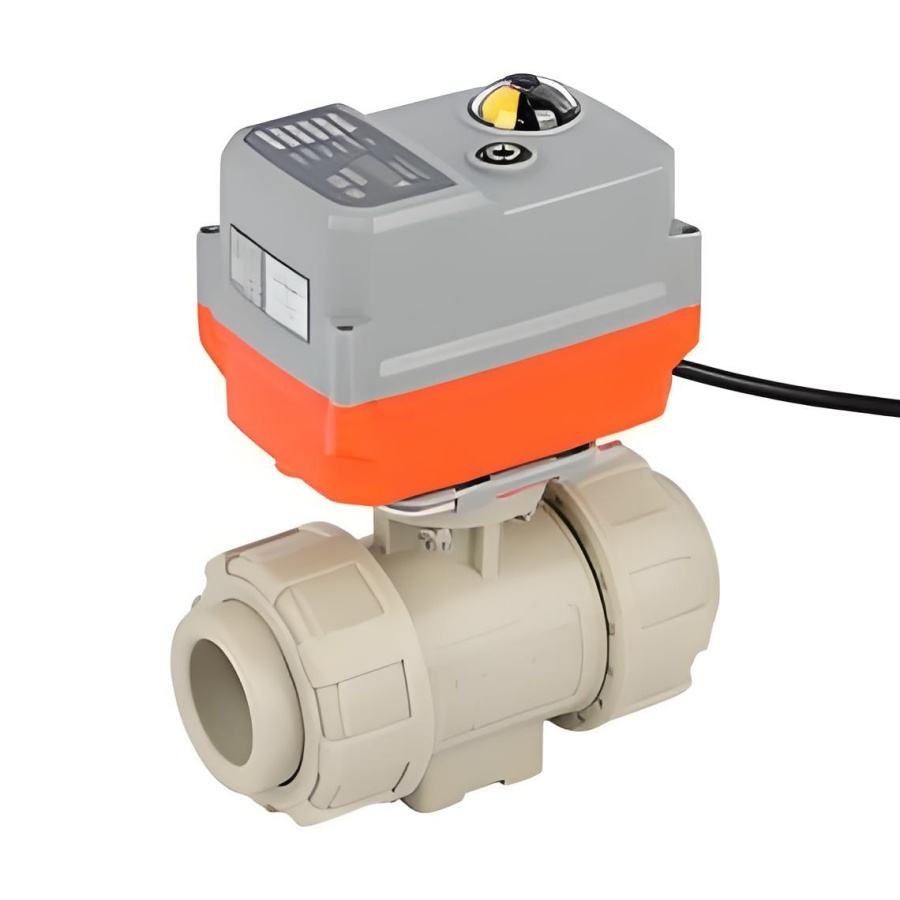
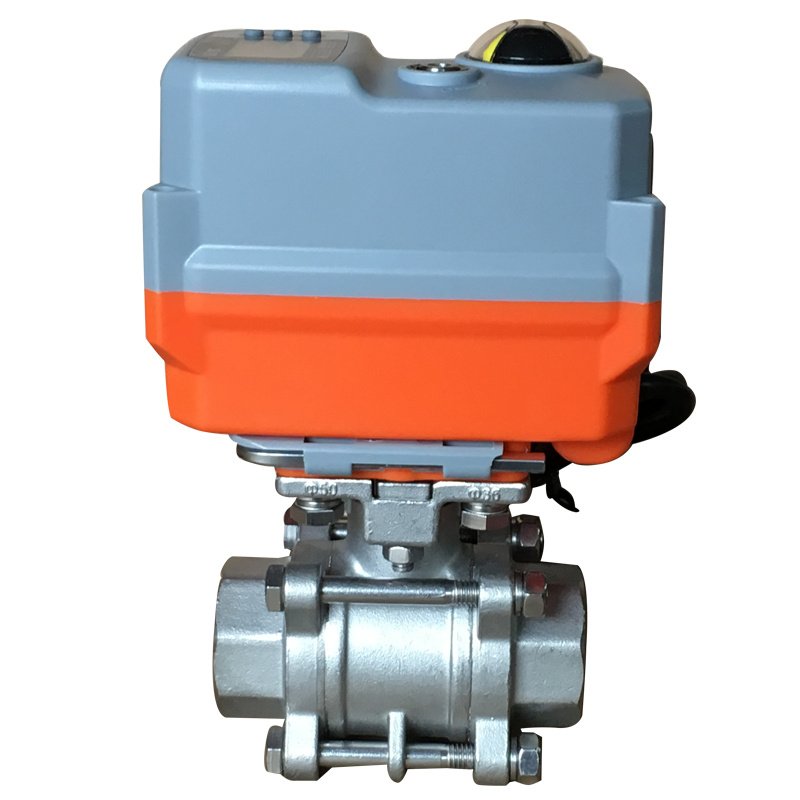
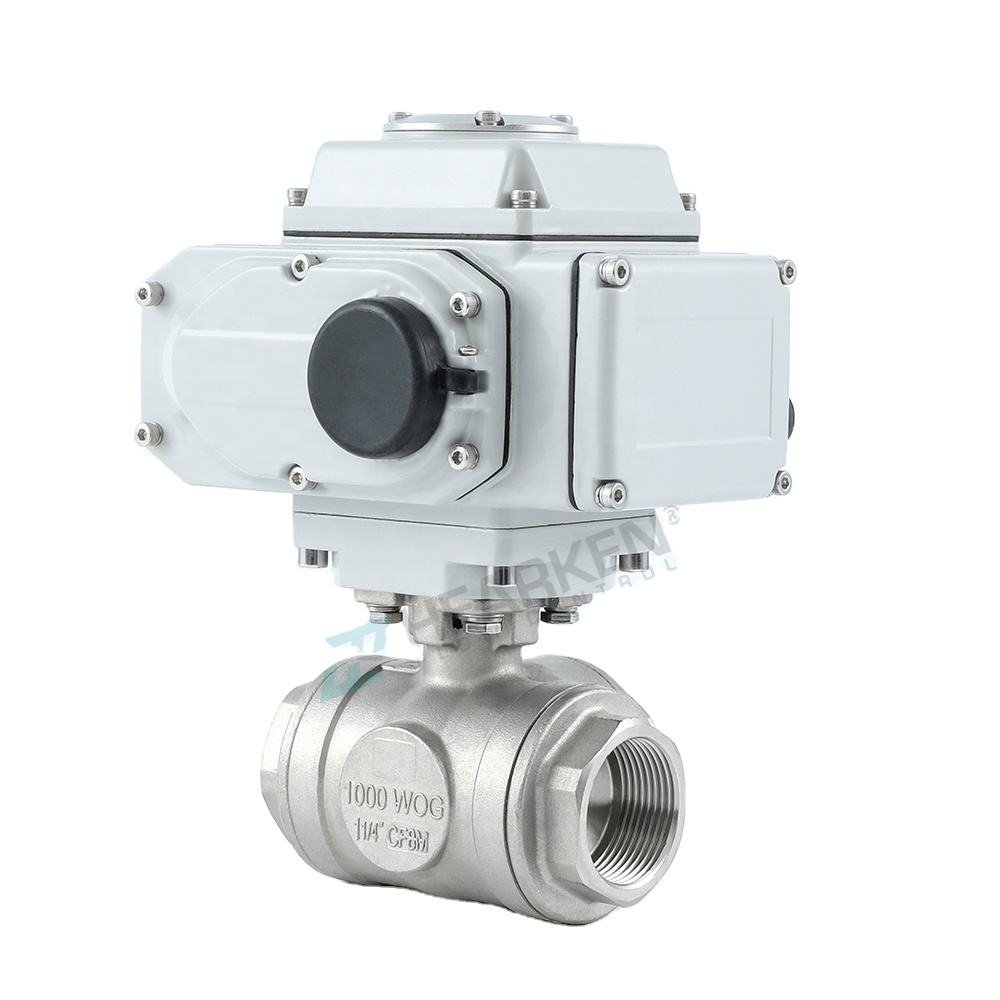
In pharmaceutical and fine chemical manufacturing, precision is not optional—it is the difference between a successful batch and a costly rejection. Processes frequently demand flow control accuracy within ±1%, temperature stability within ±0.5°C, and repeatability that meets stringent regulatory requirements. At the heart of these critical control loops lies the high-precision V-port electric control valve—a technology that delivers the accuracy, reliability, and cleanability that pharmaceutical and chemical applications demand.
This post explores how BESTONE high-precision V-port electric control valves are solving the most demanding flow control challenges in pharmaceutical and chemical processing, examines the engineering principles that enable exceptional accuracy, and highlights why our long-life, compact design valves are the preferred choice for regulated industries.
📌 TL;DR – Key Takeaways for Pharmaceutical & Chemical Professionals
1. Precision Challenge: Pharmaceutical and fine chemical processes demand flow control accuracy of ±1% or better, with repeatability that ensures batch-to-batch consistency. V-port control valves with electric actuation deliver the precision required for these sensitive applications.
2. Engineering Excellence: The V-notch ball design provides approximately equal percentage flow characteristics with a turndown ratio of 250-300:1—enabling precise control from low-flow dosing to full production rates with a single valve.
3. Precision Control: Modulating actuators support 4-20mA (superior noise immunity) and 2-10V signals with ±0.5% position accuracy, plus digital protocols including Modbus RTU, Profibus, Profinet, and EtherNet/IP for seamless DCS integration.
4. Hygienic & Cleanable Design: Clean-in-place (CIP) and steam-in-place (SIP) compatibility, crevice-free construction, and FDA-compliant materials make these valves ideal for pharmaceutical and biotech applications.
5. BESTONE Advantage: Our high-precision control valves combine exceptional accuracy (100,000+ cycles), compact modular design, and comprehensive technical support—delivering reliable, regulatory-compliant solutions for the most demanding pharmaceutical and chemical applications.
Why Pharmaceutical & Chemical Processing Demands High-Precision Control Valves
Pharmaceutical and fine chemical manufacturing operates under constraints that few other industries face:
- Batch consistency – Every batch must meet exact specifications; variability is unacceptable
- Regulatory compliance – FDA, EMA, and other agencies require validated, documented processes
- Contamination prevention – Cleanability and material compatibility are paramount
- Hazardous operations – Many processes involve flammable solvents, toxic reagents, or high pressures
- Cost sensitivity – Rejected batches are extremely expensive; precision control protects yield
Traditional control valves—such as globe valves or standard ball valves—often fall short in these demanding applications. Globe valves create tortuous flow paths that trap product, complicate cleaning, and introduce pressure drop. Standard ball valves, while durable, lack the precise throttling characteristics needed for accurate dosing and flow control.
High-precision V-port electric control valves solve these problems through a combination of design innovations:
- V-notch geometry – Creates a controlled, progressive opening that enables precise flow modulation
- Equal percentage characteristic – Provides fine control at low flow rates (where precision matters most) while maintaining capacity at high flow
- Self-cleaning shearing action – Cuts through fibers, crystals, and suspended solids to prevent clogging
- Electric actuation – Delivers ±0.5% position accuracy with no compressed air dependency, eliminating contamination risk from lubricants or condensate
Key Applications in Pharmaceutical & Chemical Processing
API (Active Pharmaceutical Ingredient) Synthesis
API manufacturing involves multi-step reactions requiring precise addition of reagents, catalysts, and solvents. Flow control accuracy directly affects reaction kinetics, yield, and purity.
BESTONE high-precision V-port valves provide:
- ±1% flow control accuracy – ensuring consistent reagent addition rates
- Repeatable dosing – batch-to-batch consistency for validated processes
- Cleanability – crevice-free designs for CIP/SIP cleaning between batches
Fine Chemical Production
Specialty chemicals, intermediates, and high-value additives require the same precision as pharmaceutical manufacturing. Many fine chemical processes handle:
- Corrosive reagents – requiring advanced alloy materials
- Suspended catalysts – requiring clog-resistant valve designs
- Temperature-sensitive compounds – requiring precise flow control to maintain thermal stability
Biopharmaceutical and Fermentation
Biotech processes involve shear-sensitive cells, viscous broths, and sterile conditions. V-port valves with hygienic designs and electric actuation:
- Minimize shear damage – the smooth flow path reduces mechanical stress on biological materials
- Enable sterility – CIP/SIP compatible designs maintain aseptic conditions
- Provide gentle control – modulating electric actuation eliminates pneumatic control valve “hammering”
Solvent Recovery and Distillation
Solvent recovery systems in pharmaceutical plants require precise pressure and flow control to maintain separation efficiency. V-port valves handle the full range from low-flow solvent returns to high-flow vapor condensing.
Tablet Coating and Granulation
In solid dosage manufacturing, spray coating and granulation processes require precise control of coating solution flow. Turndown ratios of 250:1 allow the same valve to handle both low-flow startup and high-flow production.
Hazardous Area Operations
Many pharmaceutical and chemical processes operate in classified hazardous areas. BESTONE offers explosion-proof electric actuators (Exd II BT4) with IP67 enclosures, eliminating the need for complex pneumatic systems and instrument air supplies.
Engineering Design and Precision Characteristics
Flow Characteristic: The Key to Precision Control
The flow characteristic of a control valve determines how flow rate responds to valve position. For pharmaceutical and chemical processes, equal percentage flow characteristic is preferred because it provides fine control at low flow rates—where small changes in valve position produce small changes in flow, enabling precise dosing.
BESTONE V-port valves are engineered to deliver approximately equal percentage flow characteristic across the entire operating range. The V-notch geometry is precisely machined to achieve this response, with the following benefits:
- Fine control at low flow – small incremental changes for accurate dosing
- Stable control at normal flow – smooth, predictable response
- Full capacity at high flow – no sacrifice of maximum throughput
Flow Characteristics Curve
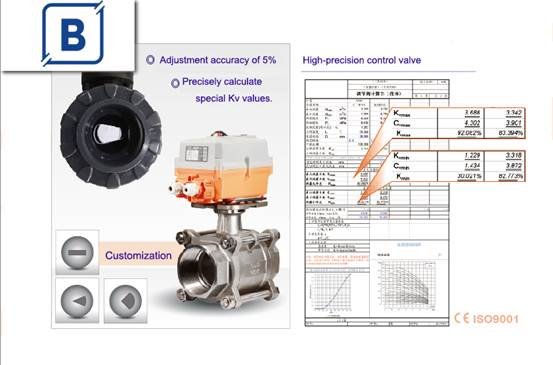
BESTONE V-port ball valves deliver an approximately equal percentage flow characteristic, providing the precise throttling control essential for pharmaceutical and chemical processes. The curve demonstrates how the V-notch design achieves fine resolution at low openings (where precision matters most) while maintaining full capacity at higher openings.
Standard Product Cv Value Reference Table
Cv (flow coefficient) is the industry-standard measure of valve capacity. Selecting the correct Cv ensures the valve operates in its optimal control range—not oversized (which reduces precision) or undersized (which limits capacity).
How to Use This Table: For a given process, calculate the required Cv based on flow rate, pressure drop, and specific gravity. Select the valve size whose Cv rating exceeds the calculated requirement (typically by 20-30% for safety margin), but avoid oversized valves that would operate at very low openings where control precision is reduced. BESTONE’s engineering team can assist with sizing calculations.
Turndown Ratio: Achieving a Wide Control Range
The turndown ratio is the ratio of maximum to minimum controllable flow. BESTONE V-port valves achieve turndown ratios of 250:1 to 300:1—far exceeding most globe valves (30:1 to 50:1) and butterfly valves (20:1 to 100:1). This means:
- A single valve handles both low-flow dosing and high-flow production
- Fewer valves are required for a process (reducing installed cost)
- Control precision is maintained across the entire production range
Seat Design Options for Different Applications
BESTONE offers multiple seat configurations to match pharmaceutical and chemical process requirements:
| Seat Type | Leakage Rating | Temperature Range | Best For |
| PTFE Soft Seat | Class VI (bubble-tight) | -20°C to +200°C | Clean media, high-purity water, solvents |
| PPL Enhanced Seat | Class VI | -20°C to +260°C | Higher temperature clean service |
| Metal Seat (Stellite hardfacing) | ≤10⁻⁶ × rated Cv | Up to +450°C | Abrasive slurries, high temperature, catalyst suspensions |
| Hygienic Seat (FDA-compliant) | Class VI | -20°C to +150°C | Pharmaceutical, biotech, food |
Seat Configuration Schematic Diagrams
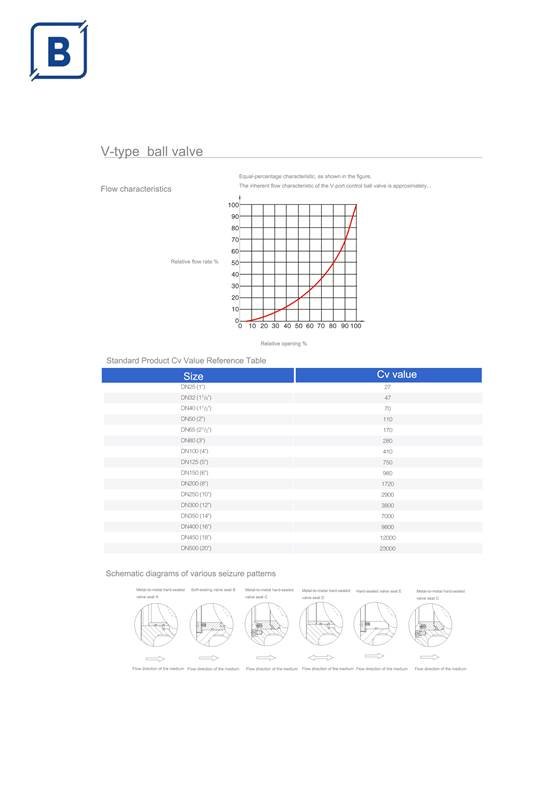
The schematic above shows the various seat designs available from BESTONE, allowing engineers to match sealing performance, temperature capability, and cleanability to specific process requirements.
Precision Control: Actuator and Control System Integration
Actuator Performance Specifications
BESTONE modulating electric actuators for V-port control valves deliver:
| Parameter | Specification |
| Control Signal | 4-20mA (standard), 2-10V (optional) |
| Position Accuracy | ±0.5% |
| Repeatability | ±0.3% |
| Resolution | <0.1% of full scale |
| Dead Band | Programmable (default 0.5%) |
| Response Time | <0.5 seconds (adjustable) |
| Feedback Signal | 4-20mA (actual position) |
| Digital Protocols | Modbus RTU, Modbus TCP/IP, Profibus, Profinet, EtherNet/IP, IO-Link |
Control Signal Options
4-20mA Current Signal – Preferred in pharmaceutical and chemical plants for:
- Superior noise immunity in electrically noisy environments
- Longer signal transmission distances (up to 1,000 meters)
- Easy troubleshooting (open circuit = 0mA, indicates wiring fault)
2-10V Voltage Signal – Common in older control systems and building automation; supported for compatibility with existing infrastructure.
Digital Communication – Increasingly preferred for:
- Real-time diagnostics and condition monitoring
- Predictive maintenance alerts
- Process data logging for regulatory compliance
- Remote calibration and configuration
Factory Production Process
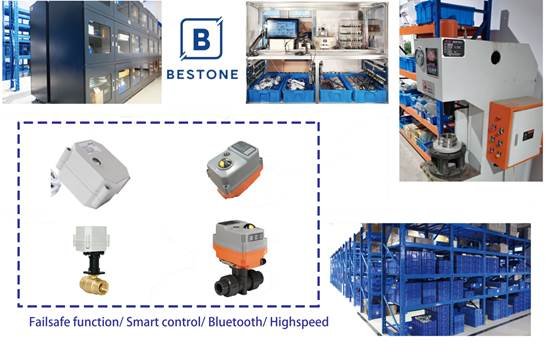
BESTONE’s ISO-certified manufacturing facilities employ rigorous quality control at every stage of production. Each valve undergoes:
- Material certification – traceable material test reports for all wetted parts
- Precision machining – CNC-controlled ball and seat fabrication
- Assembly in clean conditions – controlled environments for hygienic valves
- Hydrostatic testing – pressure integrity verification per API 598
- Seat leakage testing – Class VI verification where required
- Actuator calibration – 4-20mA and 2-10V signal verification
- Cycle testing – validation of endurance and wear resistance
This comprehensive manufacturing process ensures that every BESTONE valve meets the demanding requirements of pharmaceutical and chemical service.
DCS/PLC Integration
BESTONE high-precision V-port valves integrate seamlessly with leading Distributed Control Systems (DCS) and Programmable Logic Controllers (PLC) from major vendors. Key features include:
- Modbus RTU over RS-485 – standard for legacy systems
- Modbus TCP/IP – for modern Ethernet-based networks
- Profinet – real-time industrial Ethernet
- EtherNet/IP – common in North American plants
- IO-Link – for smart field device communication and diagnostics
Comparison: High-Precision V-Port Control Valve vs. Alternatives
Pharmaceutical and chemical engineers often ask: “Why choose a high-precision V-port electric control valve over a globe control valve, standard ball valve, or butterfly valve?” The table below provides a clear comparison for regulated process applications.
| Feature | V-Port Electric Control Valve | Globe Control Valve | Standard Ball Valve | Butterfly Valve |
| Flow Characteristic | Equal % (ideal for dosing) | Linear or Equal % | On-off only | Equal % |
| Turndown Ratio | 250-300:1 | 30-50:1 | Limited | 20-100:1 |
| Precision at Low Flow | Excellent | Good | Poor | Poor |
| Cleanability (CIP/SIP) | Excellent | Poor | Good | Fair |
| Self-Cleaning Action | Yes | No | No | No |
| Shearing Action (solids) | Yes | No | No | No |
| Pressure Drop | Low | High | Very Low | Low-Medium |
| Bidirectional Flow | Yes | Yes | Yes | Limited |
| Fugitive Emissions | Low (electric actuation) | Low | Low | Low |
| Maintenance Frequency | Low | High | Low | Low |
| Hygienic Design Options | Yes | Limited | Yes | No |
| Hazardous Area Rating | Yes (Exd II BT4) | Yes | Yes | Yes |
For pharmaceutical and chemical applications requiring precision dosing, cleanability, and reliable operation with challenging process media, the high-precision V-port electric control valve offers clear advantages—particularly in total cost of ownership, regulatory compliance, and process stability.
Market Trends Driving Adoption
1. Continuous Manufacturing in Pharmaceuticals
The pharmaceutical industry is shifting from batch to continuous manufacturing—a transformation that demands exceptionally reliable, precise flow control equipment. Continuous processes require valves that can operate for extended periods with no drift, no maintenance, and no variability.
BESTONE V-port valves with electric actuation and digital diagnostics are purpose-built for continuous manufacturing, providing the real-time control and predictive maintenance capabilities that these processes require.
2. Regulatory Pressure for Data Integrity
FDA 21 CFR Part 11, EU Annex 11, and similar regulations require electronic records and signatures for process validation. Digital-ready V-port valves with position feedback, cycle counting, and diagnostics support compliance by:
- Logging valve position and response data
- Time-stamping all events
- Supporting audit trail requirements
- Enabling paperless validation
3. Single-Use and Hybrid Systems
Biopharmaceutical manufacturing increasingly uses single-use and hybrid systems. V-port valves are being adapted with specialized end connections for single-use assemblies, enabling precise flow control without product contact concerns.
4. Energy Efficiency and Sustainability
The chemical and pharmaceutical industries face increasing pressure to reduce energy consumption. V-port valves contribute by:
- Minimizing pressure drop (saving pumping energy)
- Enabling efficient reactor heat transfer through precise flow control
- Reducing waste through improved process yield
5. High-Potency API (HPAPI) Handling
High-potency active pharmaceutical ingredients require containment solutions to protect operators and the environment. BESTONE offers:
- Bellows-sealed and stem-sealed designs
- Full containment compatibility
- Electric actuation (no pneumatic exhaust)
6. Digital Twins and Smart Manufacturing
Pharmaceutical and chemical manufacturers are implementing digital twins—virtual replicas of physical processes. V-port valves with digital communication provide the real-time performance data needed to validate digital twin models and enable predictive optimization.
Selection Guide: Choosing the Right V-Port Electric Control Valve
Pharmaceutical and chemical engineers should consider the following factors when specifying high-precision V-port electric control valves:
Step 1: Define Control and Process Requirements
| Parameter | Questions to Ask |
| Fluid Characteristics | Is it clean, viscous, abrasive, fibrous, or corrosive? Does it contain suspended solids or crystals? |
| Flow Rate | What is the expected flow rate range? Minimum, normal, and maximum? |
| Pressure Drop | Available pressure drop across the valve? Both normal and maximum? |
| Temperature | Operating temperature and any temperature cycling? |
| Cleanability | Is CIP/SIP required? What are the cleaning temperatures and chemicals? |
| Accuracy | What level of flow control accuracy is required? |
| Regulatory | Does the application require FDA compliance, 21 CFR Part 11, or other regulatory approval? |
Step 2: Size the Valve Using Cv Values
Refer to the Cv Value Reference Table above:
- Calculate required Cv from process parameters: Cv = Q × √(SG / ΔP)
- Select the valve size whose Cv exceeds the calculated requirement by 20-30%
- Verify that the operating point falls within 20-80% of valve opening for best control
Step 3: Select Materials
| Component | Material Options | Application Suitability |
| Body | 316L Stainless Steel | General pharmaceutical, corrosion resistance |
| Alloy C-276 / Hastelloy | Strong acids, chlorides, aggressive chemicals | |
| WCB Carbon Steel | General chemical, hydrocarbons | |
| Ball | 316L with Stellite hardfacing | Abrasive service, high temperature |
| 316L Electro-polished | Hygienic, clean service | |
| Alloy C-276 | Severe corrosion | |
| Seat | PTFE (FDA-compliant) | Clean service, tight shut-off |
| PPL | Higher temperature clean service | |
| Metal (Stellite) | Abrasive, high temperature | |
| Packing | PTFE Chevron | General service |
| Graphite | High temperature | |
| Enhanced (low emission) | Fugitive emission control |
Step 4: Select Actuator and Control Configuration
- Torque – Select actuator torque at least 1.5× the valve required torque
- Control Signal – 4-20mA (standard), 2-10V, or digital protocol
- Fail-Safe – Spring-return (power loss closes/opens), SuperCapacitor backup, or no fail-safe
- Enclosure – IP67 (standard), IP68 (submersible), or hazardous area classification
Step 5: Plan for Installation and Maintenance
- Ensure access for installation and removal
- Allow clearance for actuator and connections
- Plan for periodic inspection and seat replacement intervals
- BESTONE’s technical support team provides full guidance on installation, commissioning, and maintenance
Why Choose BESTONE High-Precision V-Port Electric Control Valves?
Exceptional Precision and Control
BESTONE V-port valves deliver the accuracy that pharmaceutical and chemical processes demand:
- ±0.5% position accuracy – for consistent, reproducible control
- 250-300:1 turndown ratio – a single valve covers all operating ranges
- Dual-bearing support – reduces friction and ensures precise positioning
- Spring-loaded seat designs – maintain sealing performance as seats wear
Engineered for Long Life and Reliability
Pharmaceutical and chemical facilities operate 24/7/365. BESTONE valves are engineered for endurance:
- 100,000+ cycle life – designed for continuous, maintenance-free operation
- Stellite hardfacing – on metal seats for maximum wear resistance
- Anti-static and fire-safe designs – meeting API 607 for critical safety applications
- Rigorous testing – every valve is hydrostatically and seat-tested before shipment
Compact, Space-Saving Design
Pharmaceutical and chemical plants are often space-constrained. BESTONE valves feature a compact, modular design that reduces installation footprint and simplifies maintenance access.
Comprehensive Technical Support
From initial sizing through installation and ongoing maintenance, BESTONE’s engineering team provides:
- Flow and torque calculations
- Material compatibility recommendations
- DCS/PLC integration support
- Troubleshooting and maintenance guidance
- Regulatory compliance documentation
Customization and OEM Solutions
BESTONE supports custom configurations for pharmaceutical and chemical applications, including:
- Special end connections (flanged, sanitary fittings)
- Custom Cv values
- FDA-compliant materials and finishes
- OEM branding and certification requirements
Conclusion
Pharmaceutical and chemical manufacturing demands flow control equipment that delivers exceptional precision, reliability, and cleanability. High-precision V-port electric control valves, with their equal percentage flow characteristics, 250-300:1 turndown ratios, and self-cleaning shearing action, provide the accuracy and robustness that these regulated industries require.
Whether you are manufacturing APIs, fine chemicals, biopharmaceuticals, or specialty intermediates, BESTONE high-precision V-port electric control valves deliver:
- Precise, repeatable flow control – for batch-to-batch consistency
- Regulatory compliance – with FDA, EMA, and global pharmaceutical standards
- Reliability – built for 100,000+ cycles in demanding service
- Low total cost of ownership – reduced maintenance, improved yield
- Digital readiness – seamless integration with modern control systems
- Safety – fail-safe options and robust hazardous-area ratings
With BESTONE’s engineering expertise, compact designs, and comprehensive technical support, pharmaceutical and chemical manufacturers can build the precision control systems they need for today’s production demands and tomorrow’s innovation challenges.
Frequently Asked Questions
Q1: What is the key difference between a V-port ball valve and a standard ball valve for pharmaceutical applications?
A standard ball valve provides on-off isolation only. A V-port ball valve features a V-notch in the ball that allows precise throttling control and creates a shearing action that cuts through solids and fibers. For pharmaceutical applications, the V-port design also enables more precise flow control without the product-trapping cavities found in globe valves.
Q2: What control signals does a BESTONE high-precision V-port electric valve accept?
Our modulating actuators accept standard 4-20mA current signals (preferred for industrial environments due to noise immunity and long-distance transmission) and 2-10V voltage signals. Digital communication options include Modbus RTU, Modbus TCP/IP, Profibus, Profinet, and EtherNet/IP for direct integration with pharmaceutical DCS and PLC systems.
Q3: Can the valve be cleaned in place (CIP) and sterilized in place (SIP)?
Yes. BESTONE V-port valves are available with hygienic designs specifically for pharmaceutical and biopharmaceutical applications. CIP/SIP compatibility requires crevice-free internal surfaces, FDA-compliant seat materials (PTFE, modified PTFE), 316L stainless steel construction with electropolished surface finish (Ra ≤ 0.4 µm), and steam-capable temperature ratings.
Q4: What turndown ratio do BESTONE V-port valves provide?
BESTONE V-port valves achieve turndown ratios of 250:1 to 300:1, depending on seat design. This is significantly higher than globe valves (30:1 to 50:1) and butterfly valves (20:1 to 100:1), allowing a single valve to handle both low-flow dosing and full production rates.
Q5: Can the valve handle high-viscosity pharmaceutical fluids and slurries?
Yes. The self-cleaning shearing action of the V-notch ball makes it ideal for high-viscosity fluids, slurries, and suspensions. Unlike globe valves where viscous fluids cause pressure drop and clogging, V-port valves provide a smooth flow path with minimal pressure loss.
Q6: Do you offer explosion-proof valves for hazardous chemical plant areas?
Yes. BESTONE actuators are available with Exd II BT4 certification for installation in classified hazardous areas. Enclosures are rated IP67 as standard, with IP68 available for submersible applications.
Q7: How accurate is