
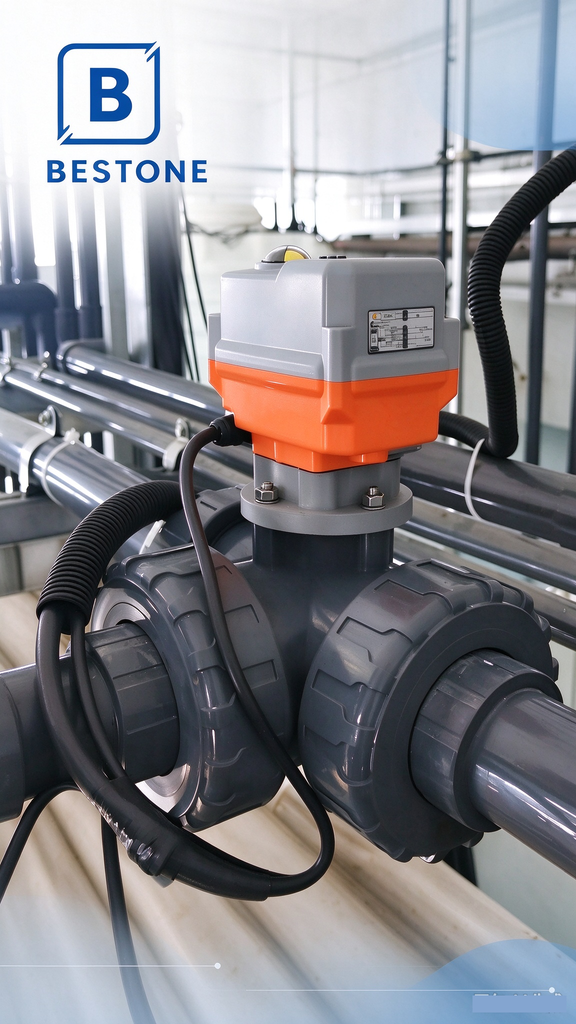
Large-scale infrastructure projects rarely succeed because of a single breakthrough technology. They succeed because hundreds of components perform exactly as required, year after year, in conditions that punish weakness. District cooling networks and seawater desalination plants are two of the clearest examples of this principle in action.
Both industries operate at the intersection of high energy consumption, corrosive environments, continuous duty, and uncompromising reliability. And in both, the micro compact electric actuator, the smallest class of modulating valve actuator, plays a role that is easy to overlook and impossible to replace.
This post examines why micro compact electric actuators are widely used in district cooling and desalination projects, what functions they perform across multiple system layers, and why BESTONE’s compact electric actuators have become a trusted component in these demanding applications.
TL;DR – Key Takeaways for District Cooling and Desalination Project Teams
1. Two Demanding Industries: District cooling networks and seawater desalination plants both require continuous operation, corrosion resistance, and precise flow control, yet operate in space-constrained, energy-sensitive environments.
2. The Micro Compact Advantage: Small-form-factor electric actuators fit into tight plant rooms, skid packages, and terminal units where conventional actuators cannot go, while delivering 4–20mA modulating control, position feedback, and IP67/IP68 protection.
3. Multiple System Layers: These actuators serve at every level, plant-level chillers and RO high-pressure pumps, distribution-level isolation and balancing, and terminal-level fan coil units and heat exchangers.
4. Irreplaceable Functions: Leak isolation, pressure and flow modulation, energy optimization, and CIP/chemical dosing control—each requiring fast, accurate, remotely monitored actuation.
5. BESTONE Advantage: Our micro compact electric actuators combine small footprint, wide temperature range, corrosion protection, and full communication capability, delivering reliable performance for district cooling and desalination infrastructure worldwide.
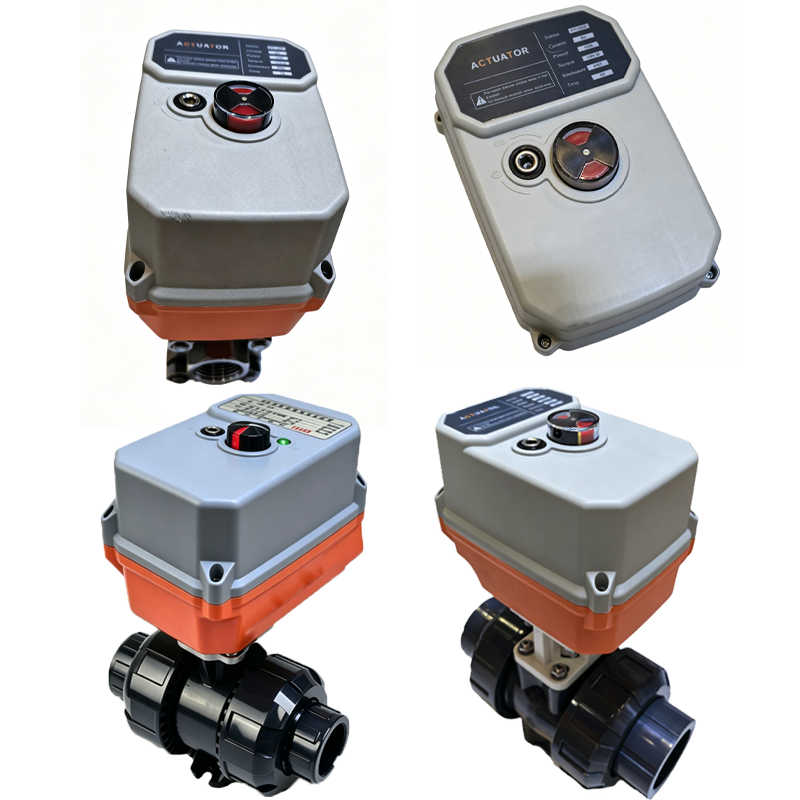
Why These Two Industries Share the Same Actuation Challenges
District cooling and seawater desalination appear unrelated on the surface. One distributes chilled water across urban districts; the other converts seawater into drinking water. Yet they share four fundamental operating realities that shape actuator selection.
1. Continuous, High-Consequence Operation
A district cooling network serves hospitals, data centers, commercial towers, and residential districts. A cooling failure in summer is not an inconvenience, it is a public health and business continuity event. Desalination plants supply potable water to cities. Downtime means reservoirs drain and communities go without.
Neither industry can tolerate actuator failures that go undetected. Both require actuators with position feedback, diagnostics, and remote monitoring capability.
2. Corrosive and Humid Environments
District cooling plants use chemically treated chilled water and often operate in coastal or humid urban environments. Desalination plants face salt-laden air and concentrated brine. Both environments attack actuator housings, seals, and cable entries.
Electric actuators with IP67/IP68 enclosures and corrosion-resistant construction are essential, and pneumatic systems, with their air lines and moisture-sensitive components, are a liability.
3. Space Constraints Everywhere
District cooling plant rooms are often located in basements or podium levels of buildings, with limited floor area. Desalination plants pack high-pressure pumps, membrane racks, and energy recovery devices into dense layouts. Terminal units, fan coil units, heat exchangers, and small distribution skids—offer only centimeters of clearance.
This is where the micro compact actuator becomes indispensable. Conventional actuators simply do not fit.
4. Energy Efficiency Is the Business Case
District cooling competes with individual building chillers on efficiency. Desalination competes on energy cost per cubic meter. In both industries, every watt of auxiliary power and every liter of unnecessary flow affects the bottom line.
Precise modulating control reduces pumping energy, improves chiller and membrane efficiency, and lowers PUE-equivalent metrics. Electric actuators that consume power only when moving—and hold position with near-zero hold-in power, contribute directly to these savings.
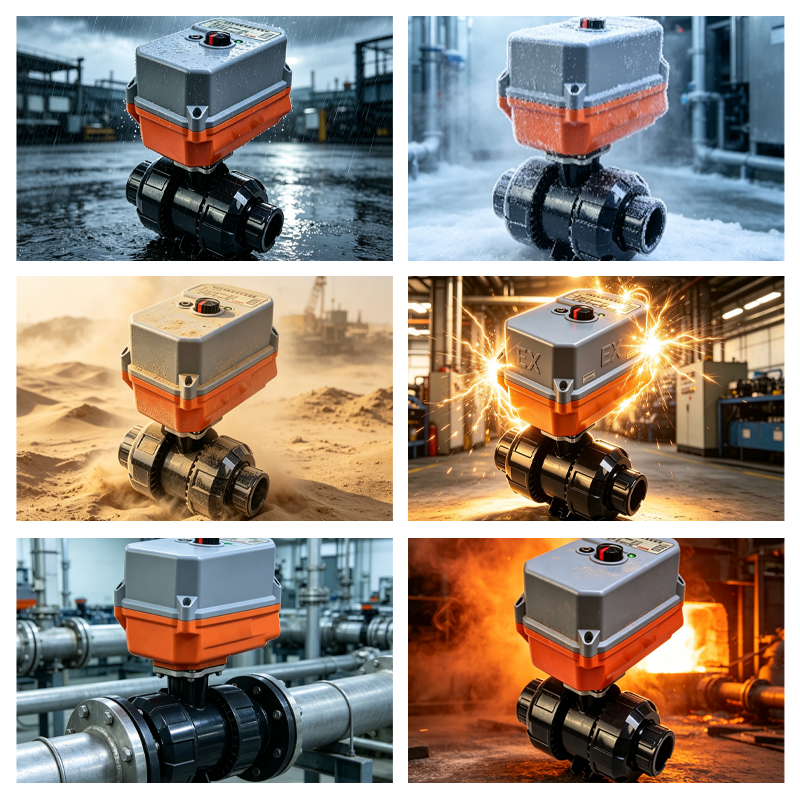
Layer 1: Plant-Level Applications
District Cooling: Central Chiller Plants
At the heart of a district cooling network are central chiller plants that produce chilled water for distribution. Micro compact electric actuators perform critical functions here:
| Application | Function | Why Micro Compact Electric |
| Chiller evaporator flow control | Modulating chilled water flow to match load | Precise 4–20mA control, compact for tight plant rooms |
| Condenser water control | Regulating cooling tower and condenser flow | Continuous duty, position feedback |
| Primary/secondary loop decoupling | Balancing flow between production and distribution loops | Fast response, modulating accuracy |
| Thermal storage charge/discharge | Controlling flow to and from thermal energy storage tanks | Reliable cycling, remote monitoring |
Desalination: High-Pressure Pump and RO Trains
In desalination, the high-pressure pump and reverse osmosis membrane trains are the most critical—and most demanding—sections of the plant.
| Application | Function | Why Micro Compact Electric |
| RO feed pressure control | Precise pressure regulation upstream of membranes | High accuracy, fast modulating response |
| Brine discharge control | Controlled release of concentrated brine | Corrosion-resistant construction, IP68 |
| Energy recovery device isolation | Isolating and sequencing energy recovery units | Compact, reliable cycling |
| Chemical dosing (antiscalant, biocide) | Precise additive control | Repeatable positioning, low flow capability |
The micro compact form factor matters here because high-pressure skids and membrane racks are densely packed. Actuators must fit between pipes, valves, and structural members without interfering with maintenance access.
Layer 2: Distribution-Level Applications
District Cooling: Network Isolation and Balancing
District cooling networks span kilometers, with isolation valves at strategic points and balancing valves at building connections.
Network isolation valves — large butterfly and gate valves at district boundaries and branch points, requiring reliable on-off actuation with position feedback for network visibility
Differential pressure control — maintaining stable pressure across the network as loads change
Building connection balancing — ensuring each connected building receives its design flow
Micro compact electric actuators are used on the smaller valves in this layer—branch isolation, bypass valves, and pressure control valves in compact vaults and substations.
Desalination: Pretreatment and Post-Treatment
Before seawater reaches the RO membranes, it passes through pretreatment, sand filtration, micro-filtration, and chemical conditioning. After desalination, the water is remineralized and disinfected.
Filter backwash sequencing — precise control of backwash flow and timing
Chemical dosing — coagulants, antiscalants, and disinfectants
Remineralization — controlled addition of minerals for potable water quality
These applications require accurate, repeatable modulating control, often in compact skid packages where micro actuators are the only practical option.
Layer 3: Terminal and Skid-Level Applications
District Cooling: Terminal Units and Heat Exchangers
At the building level, district cooling connects to fan coil units, air handling units, and heat exchangers.
Fan coil unit (FCU) valves — DN15–DN50 valves controlling chilled water to individual terminal units
Air handling unit (AHU) coils — larger valves modulating flow to maintain supply air temperature
Domestic hot water heat exchangers — plate heat exchangers requiring precise temperature control
In these applications, micro compact electric actuators with 0–10V or 4–20mA control are standard. Their small size allows installation within FCU enclosures and tight mechanical rooms, while their modulating accuracy ensures stable room temperatures and energy-efficient operation.
Desalination: Skid Packages and Auxiliary Systems
Desalination plants include numerous auxiliary skids:
Chemical dosing skids — precise reagent addition
Flushing and cleaning skids — membrane cleaning and preservation
Sampling systems — controlled sample extraction
Cooling water circuits — for pumps and auxiliary equipment
These skids are often built by OEMs and shipped pre-tested. Micro compact electric actuators simplify skid design by eliminating compressed air infrastructure and fitting within compact frames.
The Irreplaceable Functions of Micro Compact Electric Actuators
1. Fast Leak Isolation
In both district cooling and desalination, a leak can cause significant damage. Chilled water leaks in a building can damage finishes and equipment. Brine or seawater leaks in a desalination plant accelerate corrosion and create safety hazards.
Micro compact electric actuators with fast stroke times (1–5 seconds) enable rapid isolation, either triggered manually from the control room or automatically by leak detection systems.
2. Precise Pressure and Flow Modulation
District cooling requires stable differential pressure across the network to ensure all buildings receive adequate flow. Desalination requires stable feed pressure to protect membranes and maintain product quality.
Electric modulating actuators with ±1% positioning accuracy and 4–20mA control deliver the precision these applications require. Position feedback confirms that the commanded position has been achieved.
3. Energy Optimization
In district cooling, precise flow control reduces pump energy and improves chiller efficiency. In desalination, precise pressure control reduces specific energy consumption (kWh per cubic meter).
Electric actuators contribute by:
Consuming power only when moving
Providing accurate modulating control
Enabling system-wide optimization through BMS/SCADA integration
4. CIP and Chemical Dosing Control
Hygienic and chemical dosing applications require accurate, repeatable flow control. Micro compact actuators with modulating capability ensure that cleaning chemicals and treatment additives are delivered in precisely controlled quantities—reducing waste, ensuring effectiveness, and supporting regulatory compliance.
5. Remote Monitoring and Diagnostics
Both industries operate distributed assets. District cooling networks span urban areas; desalination plants may be located far from population centers.
Electric actuators with Modbus, Profibus, or BACnet communication enable remote monitoring of valve position, actuator status, and diagnostic data. This reduces site visits, improves response times, and supports predictive maintenance.
Comparison: Micro Compact Electric vs. Alternatives
| Feature | BESTONE Micro Compact Electric | Pneumatic Actuator | Conventional Electric Actuator |
| Footprint | Very small | Larger (with accessories) | Larger |
| Air Supply | Not required | Required | Not required |
| Position Accuracy | ±1% | ±2–5% | ±1% |
| Position Feedback | Standard | Requires positioner | Standard |
| Corrosion Protection | IP67/IP68, WF2 | Air system corrosion risk | Varies |
| Cold Climate | No freeze risk | Air line freeze risk | No freeze risk |
| Communication | Modbus, Profibus, BACnet | Limited | Available |
| Skid Integration | Excellent | Poor (air lines) | Good |
| Energy Consumption | Very low | High (compressor) | Low |
| Maintenance | Low | Moderate | Low |
Conclusion
District cooling and seawater desalination are two of the most demanding infrastructure sectors in the world. Both require continuous operation, corrosion resistance, precise flow control, and energy efficiency, in environments where space is limited and failure is not an option.
Micro compact electric actuators have become indispensable in both industries because they deliver what larger, pneumatic, or conventional alternatives cannot: small footprint, precise modulating control, position feedback, corrosion protection, and seamless integration with modern control systems.
From central chiller plants and RO high-pressure skids to distribution networks and terminal fan coil units, BESTONE micro compact electric actuators perform critical functions at every system layer, isolating leaks, modulating pressure and flow, optimizing energy consumption, and enabling remote monitoring.
With BESTONE micro compact electric actuators, district cooling and desalination project teams get the precision, reliability, and integration capability that modern infrastructure demands.