
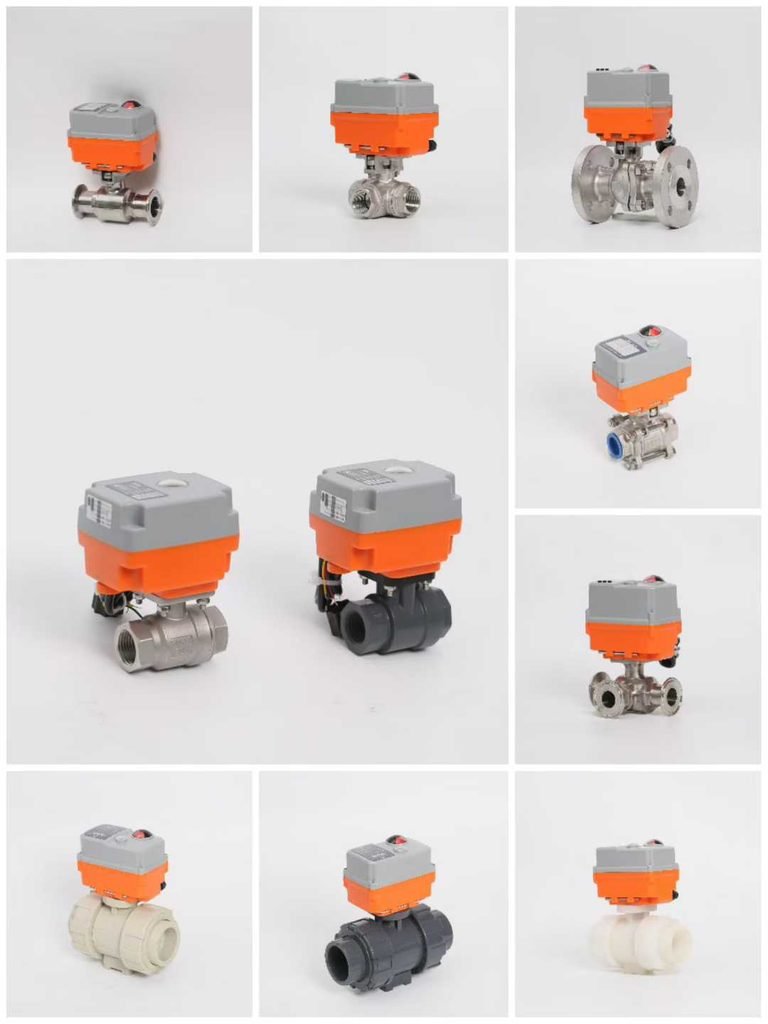
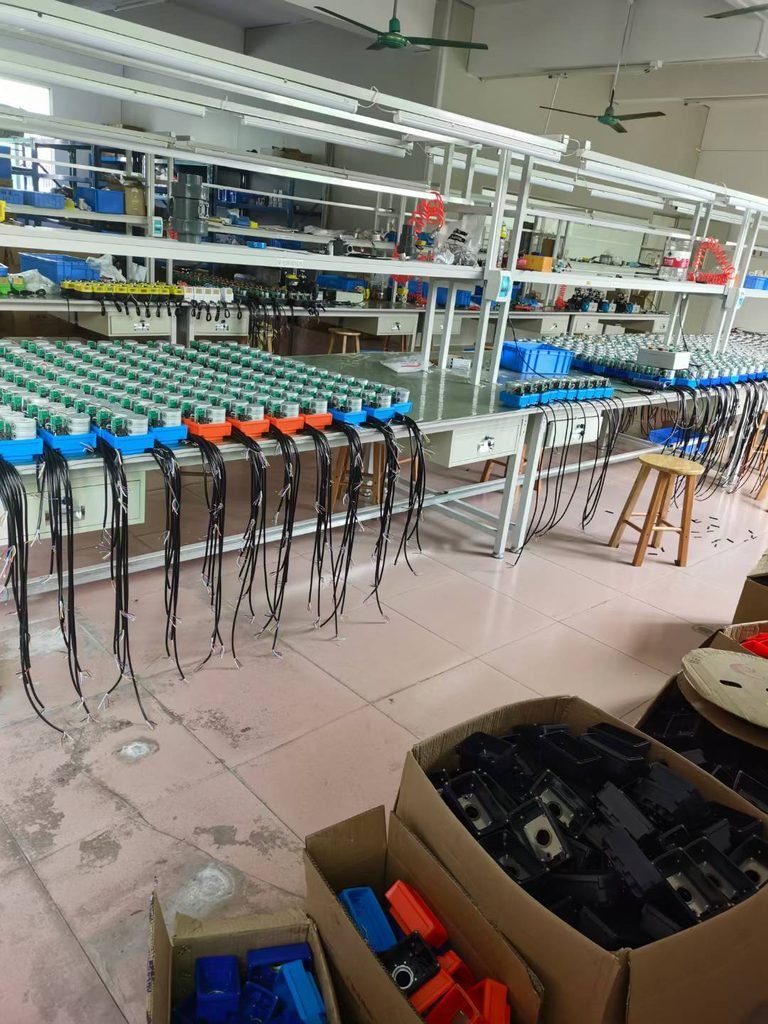
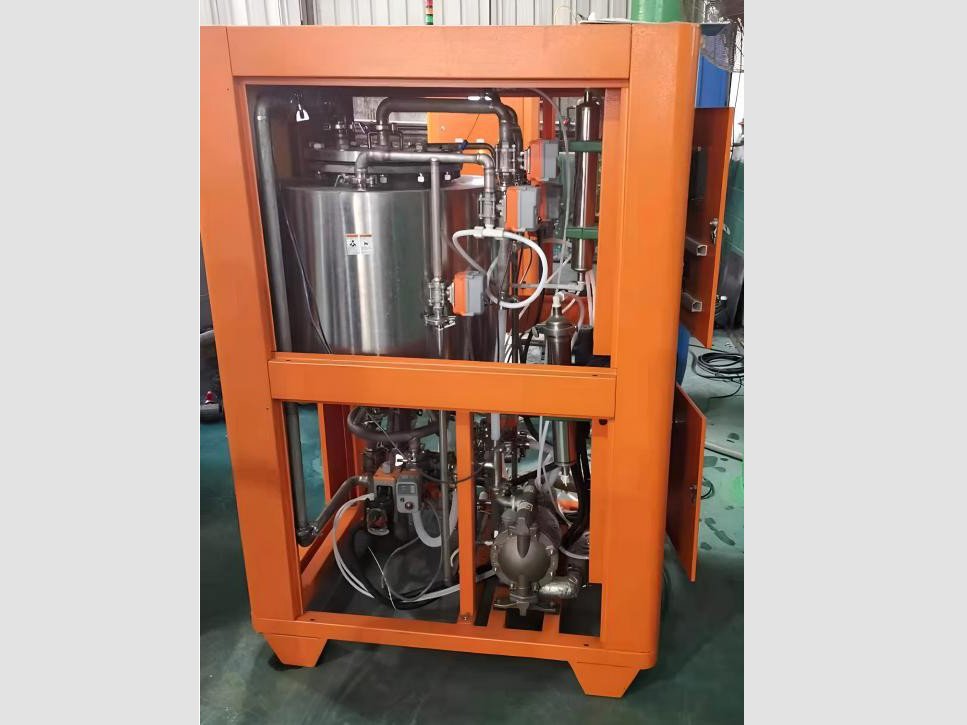
Skid-mounted equipment has become the preferred delivery model for modern process industries. Instead of building everything on-site, OEMs now fabricate complete functional units, pump skids, chemical dosing skids, filtration packages, heat transfer modules, gas conditioning units in controlled factory environments, then ship them ready to connect. This approach shortens project schedules, improves quality control, and reduces on-site labor.
But inside every skid, there is a layer of components that rarely gets attention until something goes wrong: the valve actuators. And increasingly, OEMs are specifying compact electric actuators as the standard solution for skid-mounted valve automation.
This post explores how compact electric actuators are used in OEM skid equipment, what functions they perform, and why they have become the preferred choice for packaged system designers.
TL;DR – Key Takeaways for OEM Skid Designers and Procurement Teams
1. The Skid Challenge: Skid-mounted equipment must be compact, pre-tested, and ready to operate immediately after delivery. Every component must earn its place—including actuators.
2. The Compact Advantage: BESTONE compact electric actuators reduce installation footprint, eliminate compressed air infrastructure, and simplify wiring—making them ideal for space-constrained skid layouts.
3. Core Functions: On-off isolation, modulating flow control, emergency shutdown, and drain/vent operation—all controlled via 4-20mA, 0-10V, or digital protocols.
4. OEM Benefits: Fewer components, simplified assembly, shorter commissioning time, easier documentation, and a single-supplier solution for the entire skid.
5. BESTONE Advantage: Our compact electric actuators combine small form factor, flexible voltage options, and full communication capability—delivering reliable performance for OEM skids across water treatment, chemical dosing, oil & gas, HVAC, and new energy applications.
Why OEM Skids Demand a Different Kind of Actuator
The Skid Design Philosophy
Skid-mounted equipment is built around three principles:
| Principle | Implication for Actuator Selection |
| Compact Footprint | Every component must fit within the skid frame—no wasted space |
| Pre-Assembled and Pre-Tested | All components must arrive ready to operate |
| Minimal On-Site Work | No compressed air piping, no complex wiring, no specialized installation |
Traditional pneumatic actuators struggle with these requirements. They need air supply lines, filtration, and drying equipment—adding cost, complexity, and potential failure points to every skid.
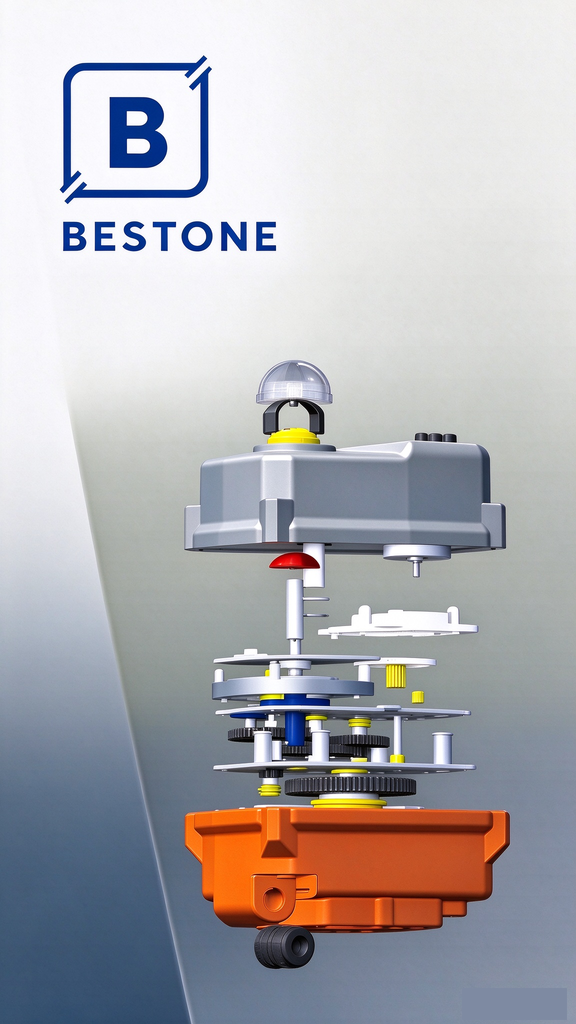
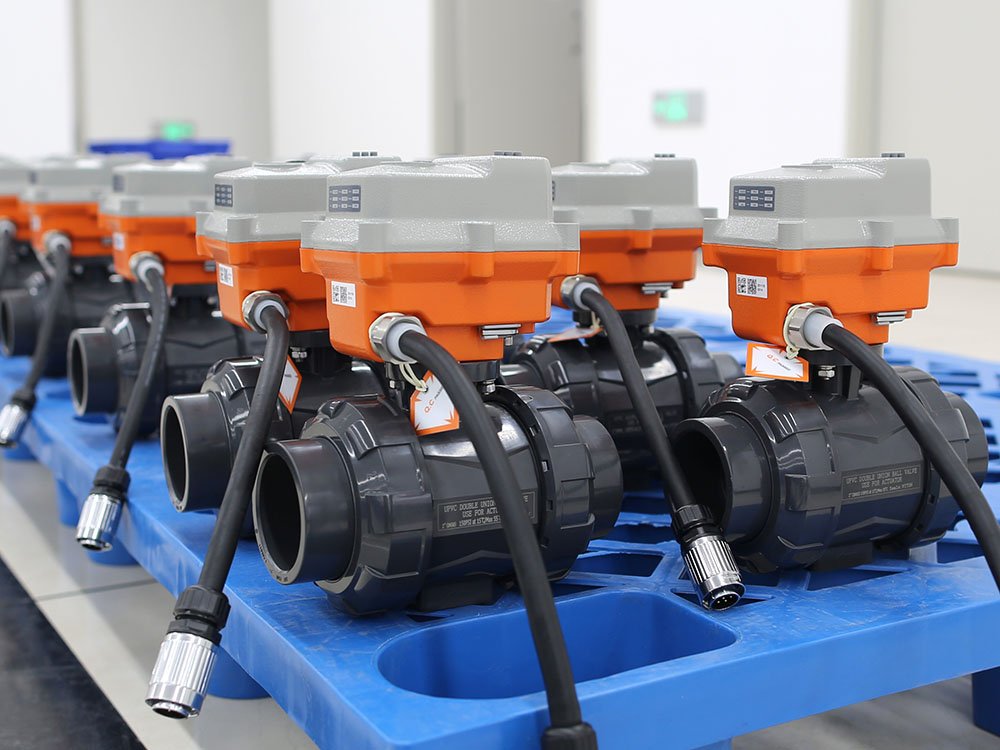
Compact electric actuators solve these problems by using electrical power only, integrating the actuator, control electronics, and communication interface into a single, compact unit.
What Makes an Actuator “Compact”?
For skid applications, compact means more than small size. It means:
Reduced installation footprint — fits in tight skid spaces
Lightweight construction — reduces skid weight and shipping cost
Direct mounting — ISO 5211 flange eliminates brackets and adapters
Integrated controls — no separate positioner or junction box required
Simple wiring — power and signal only, no air lines
Core Functions of Compact Electric Actuators in Skid Equipment
1. On-Off Isolation
The most basic function: opening and closing valves for isolation, diversion, or sequential operation.
Typical skid applications:
Pump suction and discharge isolation
Filter bank isolation for maintenance
Tank inlet and outlet isolation
Bypass line activation
Actuator requirements:
Fast, reliable operation
Position feedback for confirmation
Manual override for emergency operation
Compact size for tight mounting
2. Modulating Flow Control
Many skids require continuous flow adjustment, not just on/off operation.
Typical skid applications:
Chemical dosing rate control
Temperature regulation via cooling water flow
Pressure control in process loops
Flow balancing across multiple branches
Actuator requirements:
4-20mA or 0-10V control signal
High positioning accuracy (±1% or better)
Continuous duty rating
Position feedback for closed-loop control
3. Emergency Shutdown and Failsafe
Safety-critical skids require actuators that respond predictably during power loss or emergency conditions.
Typical skid applications:
Fuel gas shutoff on loss of power
Chemical injection shutdown on alarm
Cooling water isolation on high temperature
Pressure relief activation
Actuator requirements:
Spring-return failsafe (Fail Open or Fail Close)
SuperCapacitor backup option
Fast response time
Manual override for intervention
4. Drain, Vent, and Sampling
Skids often include drain and vent valves for maintenance and sampling.
Typical skid applications:
Low-point drain valves
High-point vent valves
Sample point isolation
Flushing connections
Actuator requirements:
Compact size
Simple on-off control
Low power consumption
Corrosion-resistant construction
Key Advantages of Compact Electric Actuators for OEM Skids
1. No Compressed Air Infrastructure
This is the single biggest advantage for skid-mounted equipment.
| Issue | Pneumatic Actuator | Compact Electric Actuator |
| Air Supply | Required | Not required |
| Air Piping | Must be routed through skid | Eliminated |
| Filtration/Drying | Required | Eliminated |
| Freeze Protection | Required in cold climates | Not required |
| Leak Risk | Air leaks possible | No air system |
| Commissioning | Air supply must be connected | Power and signal only |
For OEMs, eliminating air infrastructure simplifies skid design, reduces component count, and shortens commissioning time.
2. Simplified Wiring and Integration
Compact electric actuators integrate directly with skid control systems:
4-20mA control signal — standard for analog modulation
0-10V or 2-10V signal — compatible with many DDC and PLC outputs
Digital protocols — Modbus RTU, Profibus, BACnet for advanced integration
Position feedback — confirms valve status to the skid PLC
The skid control panel can be pre-wired and tested at the factory, with only a single power and communication connection required on-site.
3. Space and Weight Savings
Skid real estate is expensive. Every square centimeter counts.
BESTONE compact actuators offer:
Reduced footprint — up to 1/3 smaller than conventional electric actuators
Lightweight construction — lowers overall skid weight
Direct mounting — no brackets or adapters required
Integrated controls — no separate positioner or junction box
These savings allow OEMs to either reduce skid size or add more functionality within the same footprint.
4. Standardization and Repeatability
OEMs build multiple skids with identical designs. Standardizing on a single actuator platform simplifies:
Engineering — one actuator specification for all valves
Procurement — consolidated purchasing, better pricing
Assembly — familiar installation procedures
Documentation — one IOM manual for all actuators
Spare Parts — reduced inventory, common components
Training — one actuator type for all service technicians
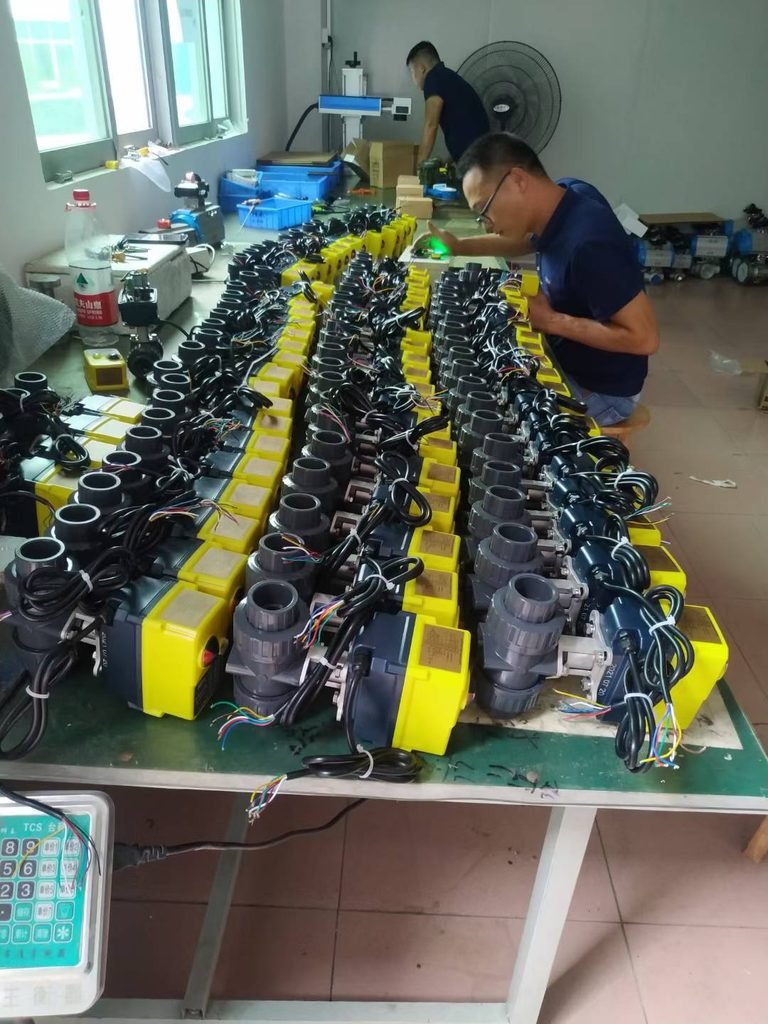
5. Pre-Testing and Factory Commissioning
Skids are tested before shipment. Compact electric actuators enable full factory testing:
Valve operation verified
Control signals calibrated
Position feedback confirmed
Communication protocols tested
Failsafe function verified
This reduces on-site commissioning time and minimizes startup delays.
6. Global Voltage Compatibility
OEM skids are shipped worldwide. BESTONE compact actuators support:
| Power Type | Voltage Options |
| AC Single-Phase | 110V, 220V, 230V, 240V |
| AC Three-Phase | 380V, 400V, 415V, 440V, 460V, 480V |
| DC | 24V, 48V, 72V, 96V |
This flexibility eliminates the need for voltage converters or custom power supplies—one actuator platform serves all destination markets.
7. Wide Temperature and Environmental Range
Skid equipment operates outdoors, in deserts, in arctic conditions, and in corrosive environments. BESTONE compact actuators deliver:
Ambient temperature — -30°C to +70°C (wider options available)
Protection rating — IP67 standard, IP68 optional
Corrosion protection — WF2 rating, powder-coated housings
Humidity — ≤95% RH, non-condensing
Typical OEM Skid Applications
Water Treatment Skids
| Skid Type | Actuator Function | Why Compact Electric |
| Chemical dosing skids | Modulating control for precise reagent addition | Precision, no air required |
| Filtration skids | Isolation and backwash sequencing | Compact size, position feedback |
| Reverse osmosis skids | High-pressure feed control, flush valves | High torque, corrosion resistance |
| Softener skids | Regeneration sequencing, brine control | Simple on-off, reliable operation |
Chemical and Petrochemical Skids
| Skid Type | Actuator Function | Why Compact Electric |
| Reactor feed skids | Precise flow control | ±1% accuracy, hazardous area options |
| Heat transfer skids | Temperature regulation via flow modulation | Continuous duty, 4-20mA control |
| Dosing and injection skids | Chemical addition control | Repeatability, position feedback |
| Sampling skids | Sample isolation and sequencing | Compact, simple control |
Oil and Gas Skids
| Skid Type | Actuator Function | Why Compact Electric |
| Wellhead control skids | Pressure and flow regulation | No air at remote sites |
| Separation skids | Level and pressure control | Modulating control, failsafe |
| Metering skids | Flow diversion and proving | Precision, position feedback |
| Fuel gas skids | Pressure reduction and shutoff | Failsafe, explosion-proof |
HVAC and Building Services Skids
| Skid Type | Actuator Function | Why Compact Electric |
| Chiller skids | Chilled water flow control | BMS integration, compact |
| Boiler skids | Feedwater and steam control | Precision, continuous duty |
| Heat pump skids | Refrigerant and water flow control | Modulating control, position feedback |
| Energy recovery skids | Air and water flow balancing | BMS integration, diagnostics |
New Energy Skids
| Skid Type | Actuator Function | Why Compact Electric |
| Green hydrogen skids | Electrolyzer feed and cooling control | No air infrastructure in new projects |
| CCUS skids | Solvent flow and pressure control | Precision, remote monitoring |
| Battery thermal skids | Coolant flow control | Fast response, PUE optimization |
| Molten salt skids | Heat transfer loop control | High temperature, robust construction |
What OEMs Should Evaluate When Selecting Compact Actuators
1. Physical Size and Mounting
| Parameter | Questions to Ask |
| Footprint | Does it fit in the available skid space? |
| Weight | Does it add unnecessary weight to the skid? |
| Mounting | Is ISO 5211 direct mounting available? |
| Orientation | Can it be mounted in any position? |
2. Control and Communication
| Parameter | Questions to Ask |
| Control Signal | 4-20mA, 0-10V, or digital? |
| Feedback | 4-20mA, limit switches, or digital? |
| Protocols | Modbus, Profibus, BACnet, or EtherNet/IP? |
| Local Interface | LCD screen for local commissioning? |
3. Performance Specifications
| Parameter | Questions to Ask |
| Torque | Does it meet the valve torque requirement with safety margin? |
| Speed | Is the stroke time suitable for the application? |
| Duty Cycle | Is it rated for continuous operation? |
| Accuracy | Is positioning accuracy sufficient for control? |
4. Environmental and Safety
| Parameter | Questions to Ask |
| Temperature | Does it handle the ambient temperature range? |
| Protection | Is IP67 or IP68 required? |
| Corrosion | Is WF2 or equivalent protection needed? |
| Hazardous Area | Is explosion-proof certification required? |
| Failsafe | Is spring-return or SuperCapacitor backup needed? |
5. Documentation and Support
| Parameter | Questions to Ask |
| IOM Manual | English manual available? |
| Certifications | CE, UL, ATEX, SIL available? |
| Test Reports | Factory test reports provided? |
| Technical Support | Engineering support for sizing and integration? |
Solving Real-World OEM Skid Problems
Problem 1: Space-Constrained Dosing Skid
Scenario: A chemical dosing skid must fit within a standard shipping container. Every component must be minimized. Pneumatic actuators and air lines consume too much space.
Solution: BESTONE compact electric actuators replace pneumatic actuators. Air lines, filters, and dryers are eliminated. The skid fits comfortably within the container, and commissioning requires only power and signal connections.
Problem 2: Remote Wellhead Skid Without Air
Scenario: A wellhead control skid is destined for a remote location with no instrument air supply. Pneumatic actuators would require a compressor and air system.
Solution: BESTONE electric actuators with 4-20mA control and Modbus communication operate directly from solar power. No air infrastructure is required. Remote monitoring is enabled via SCADA integration.
Problem 3: Global Deployment Voltage Variation
Scenario: An OEM ships identical skids to North America, Europe, the Middle East, and Asia. Different voltages are required in each region.
Solution: BESTONE compact actuators support AC110V–480V and DC24V–96V, with wide-range power supplies. One actuator platform serves all destinations, simplifying inventory and documentation.
Problem 4: Factory Testing and Commissioning
Scenario: An OEM wants to fully test each skid before shipment, including valve operation and control response.
Solution: BESTONE compact actuators with 4-20mA feedback and digital communication enable complete factory testing. Valve position, control response, and failsafe operation are verified before the skid leaves the factory.
Problem 5: Cold Climate Installation
Scenario: A water treatment skid is installed in a region where winter temperatures drop to -30°C. Pneumatic actuators risk air line freeze-up.
Solution: BESTONE compact electric actuators are rated for -30°C operation. No air lines to freeze. The skid operates reliably year-round.
Comparison: Compact Electric vs. Pneumatic Actuators for OEM Skids
| Feature | BESTONE Compact Electric | Pneumatic Actuator |
| Air Supply Required | No | Yes |
| Air Piping | Eliminated | Required |
| Filtration/Drying | Eliminated | Required |
| Freeze Protection | Not required | Required |
| Footprint | Compact | Larger (with accessories) |
| Weight | Lighter | Heavier |
| Wiring | Power and signal only | Power, signal, and air |
| Position Feedback | Standard | Requires positioner |
| Diagnostics | Built-in | Limited |
| Factory Testing | Full test possible | Requires air supply |
| Commissioning | Simple | Complex |
| Global Voltage | Wide range available | N/A |
| Total Cost | Lower | Higher (with air system) |
Conclusion
Compact electric actuators have become the preferred solution for OEM skid-mounted equipment because they solve the fundamental challenges of packaged system design: space, simplicity, reliability, and global compatibility.
By eliminating compressed air infrastructure, reducing footprint, simplifying wiring, and providing precise control with position feedback, these actuators enable OEMs to build better skids—faster, more reliably, and at lower total cost.
For OEMs designing water treatment, chemical dosing, oil and gas, HVAC, and new energy skids, BESTONE compact electric actuators offer:
Compact size — fits tight skid layouts
No air required — simpler infrastructure, lower cost
Precise control — ±1% accuracy for modulating applications
Position feedback — confirms valve status for control and monitoring
Digital communication — Modbus, Profibus, BACnet integration
Wide voltage range — AC110V–480V, DC24V–96V for global deployment
Wide temperature range — -30°C to +70°C for outdoor and cold climate
Full documentation — IOM manuals, test reports, certifications
Whether you are building a single skid or a fleet of packaged systems, BESTONE compact electric actuators deliver the performance, reliability, and simplicity that OEM skid designers demand.