
The liquid cooling industry is experiencing unprecedented growth, driven by the explosive demand for AI computing power, high-density data centers, and advanced thermal management solutions across industrial sectors. At the heart of this revolution lies a critical yet often overlooked component: the smart electric actuator. As liquid cooling systems become more sophisticated, electric actuators have evolved from simple on/off devices into intelligent, network-connected electric modulating actuators that deliver precision flow control, energy efficiency, and system-wide coordination.
In this post, we’ll explore how electric valve actuators are transforming liquid cooling applications, examine the latest market trends, and highlight why our long-life, compact design actuators are setting new standards in the industry.
The Liquid Cooling Boom: Why Electric Actuators Matter Now More Than Ever
The numbers tell a compelling story. The global electric actuators market was valued at USD 23.84 billion in 2025 and is projected to reach USD 42.33 billion by 2032, growing at a CAGR of 8.54%. The data center liquid cooling market alone is expected to grow from $5.1 billion in 2025 to $6.41 billion in 2026 at a remarkable CAGR of 25.7%.
What’s driving this surge? The rapid adoption of liquid cooling in AI data centers is a primary catalyst. The International Energy Agency predicts that global data center power consumption will exceed 800–1,050 TWh by 2026, representing a 75% increase over four years. As AI chips continue to push power densities higher, traditional air cooling is no longer sufficient—liquid cooling has become the De facto standard for high-performance computing environments.
Within these systems, intelligent electric actuators serve as the “smart hands” that translate control commands into precise mechanical actions, ensuring efficient and reliable coolant delivery to high-density IT equipment.
Application Details: How Electric Actuators Work in Liquid Cooling Systems
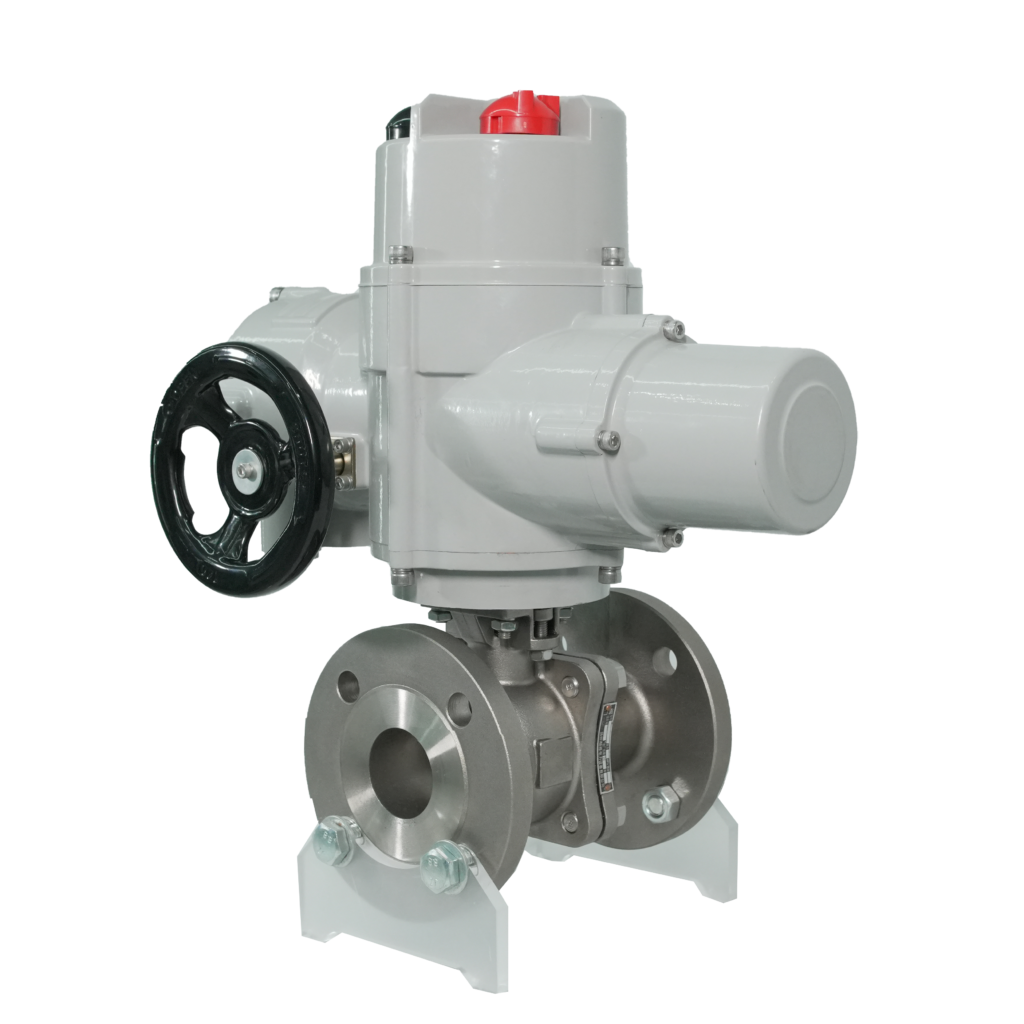
In liquid cooling systems, particularly within Coolant Distribution Units (CDUs) found in data centers, electric actuators are installed on regulation or shut-off valves. They receive electrical signals from the control system to adjust valve openings, thereby precisely regulating coolant flow and pressure.
Precision Control with 4-20mA and 2-10V Signals
Modern electric modulating actuators are designed to receive standard analog control signals. The most common configurations include:
- 4-20mA current signal — widely preferred in industrial environments for its superior noise immunity. In industrial sites with significant electromagnetic interference, 4-20mA signals offer significantly better immunity than voltage-based signals. This makes them the gold standard for mission-critical data center cooling applications where signal integrity is paramount.
- 2-10V or 0-10V voltage signals — commonly used in HVAC and building automation applications. Many actuators support both signal types with settable control signal selection, offering flexibility across different control systems.
These actuators can achieve regulation accuracy within ±1%, supporting 0-100% stepless adjustment—sufficient to meet CDU system temperature control requirements of ±0.5°C. Products like the BESTONE modulating 0(2)-10VDC or 0(4)-20mA signals to provide precise control, with features including position feedback, force switch-off to prevent overload, and self-positioning capability.
Flow Balancing
One of the most critical functions is flow balancing. Electric valve actuators enable fine-tuning of coolant flow in each branch pipeline, ensuring balanced cooling distribution across server racks and avoiding flow imbalances caused by varying pipeline lengths or resistance. This prevents local hot spots that could damage expensive server equipment.
Pressure Control
By dynamically adjusting valve openings, actuators maintain system pressure within a safe and efficient range, preventing leaks or cavitation that could compromise system integrity.
Redundancy Switching
In redundant designs with dual pumps or dual circuits, electric actuators control switching valves. If the primary unit fails, actuators quickly redirect flow to the backup unit, ensuring uninterrupted cooling, a non-negotiable requirement for 7×24 data center operations.
Automated Operation with Digital Communication
Modern smart electric actuators integrate seamlessly with Building Management Systems (BMS) and Data Center Infrastructure Management (DCIM) platforms. Integrated digital communication protocols—including Modbus (Modbus-RTU over RS-485, Modbus TCP/IP), EtherNet/IP, PROFINET, Profibus, HART, and IO-Link—allow these devices to plug directly into automation systems for real-time monitoring, alarming, and optimization.
IO-Link is particularly transformative, enabling four different types of transmissions, process data, diagnostics, configuration, and events. If an actuator fails, it can be flagged for quick processing, enabling predictive maintenance and minimizing downtime.
Market Trends: What’s Shaping the Electric Actuator Landscape
1. Intelligence and Connectivity
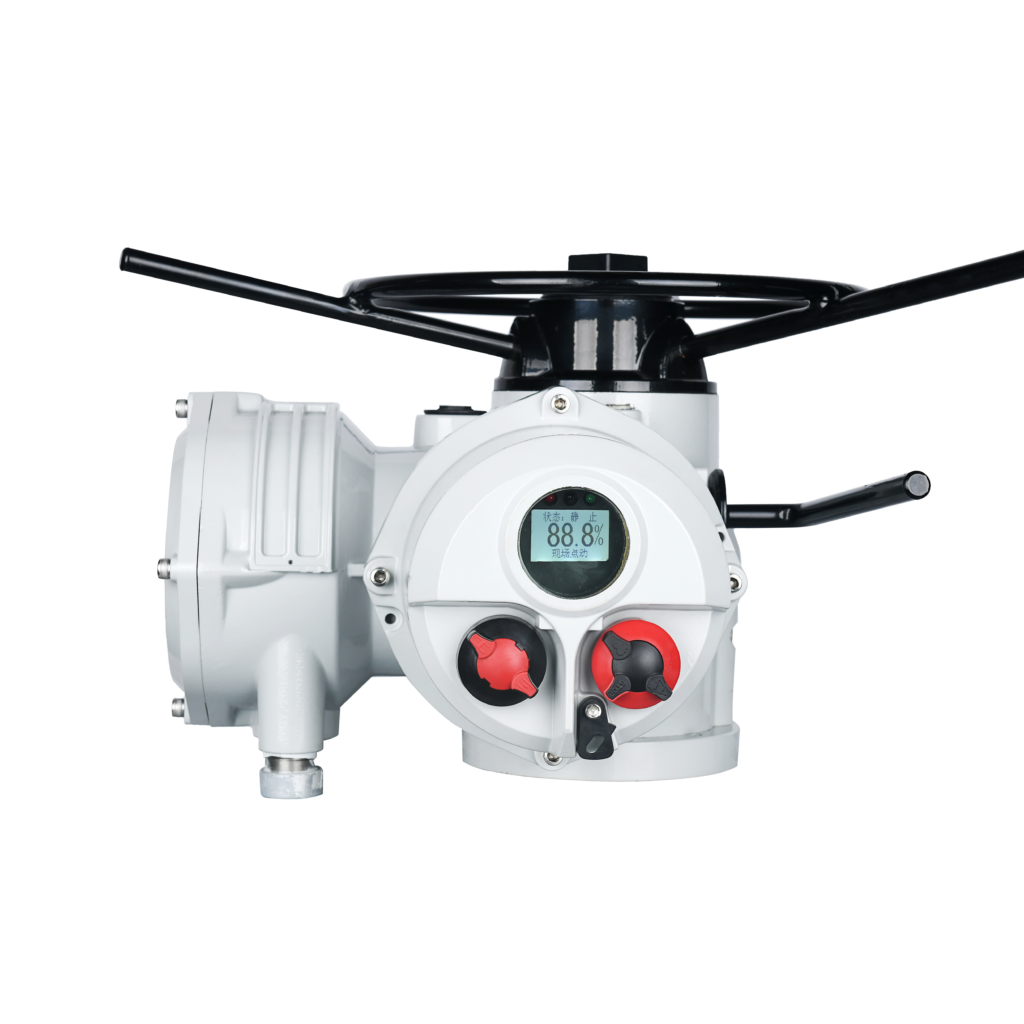
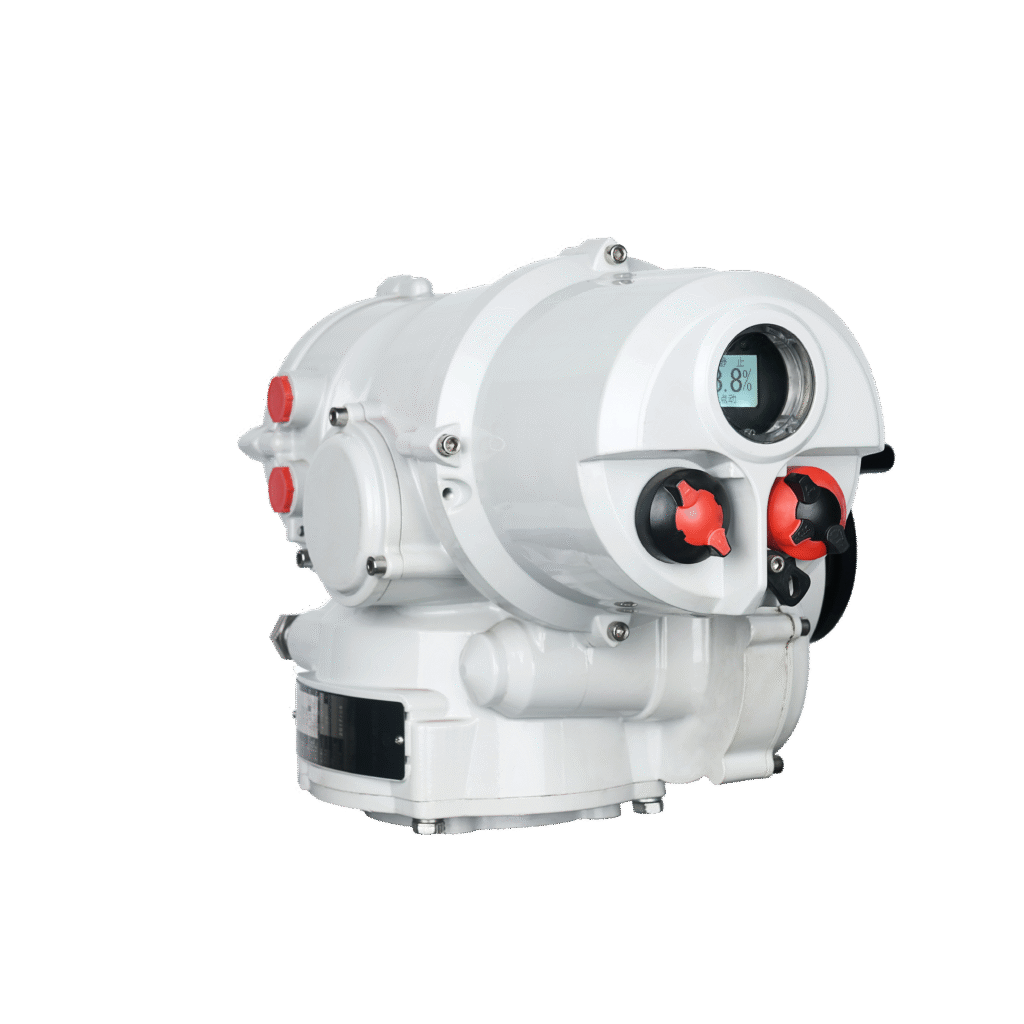
The days of standalone actuators are over. AI is transforming smart electric actuators from simple mechanical execution devices into intelligent sensing-decision-control nodes within industrial systems. All-in-one smart actuators now combine the actuator mechanism, motor, drive electronics, sensors, controller, and communication interface within a single compact unit. This isn’t incremental improvement, it’s a structural transformation redefining the industry value chain.
2. Ultra-Long Life and Reliability
Data centers require 7×24 continuous operation. Leading products now feature dual 100,000-cycle life designs for both valve bodies and actuators, with built-in power-off retention functionality that perfectly matches the demanding operating conditions of data centers.
3. Fail-Safe Protection
Power outages are inevitable. Advanced electric actuators now incorporate SuperCapacitor technology or battery fail-safe kits that automatically drive valves to preset fail-safe positions during power interruptions—making them ideal for liquid cooling systems and critical pipelines where uninterrupted protection is mandatory.
4. Compact, Space-Optimized Designs
As liquid cooling systems become more integrated, space is at a premium. Manufacturers are developing increasingly compact, high-protection modular electric actuators specifically designed for fluid control automation and liquid cooling system control. IP67-rated enclosures ensure reliable operation in leak-prone environments.
Key Functionality: Cost Reduction, System Coordination, and Energy Efficiency
Reducing Total Cost of Ownership
Electric actuators offer significant cost advantages over hydraulic and pneumatic alternatives. Unlike hydraulic pumps that operate continuously, electric actuators consume energy only when performing work—leading to substantial energy savings, especially in systems with intermittent duty cycles. Typical power consumption ranges from 25W for modulating butterfly valve actuatorsto as low as 1 VA for hold-in power consumption in advanced designs.
Moreover, electric actuators require minimal maintenance. With fewer moving or degradable parts, maintenance is simple and reliable. They don’t use consumable materials like fluid or seals that must be routinely replaced in hydraulic and pneumatic systems, further reducing overall operating costs.
Enhancing System Coordination
Modern smart actuators support standard control signals (4-20mA analog, 2-10V, Modbus, Profinet, EtherNet/IP) and integrate seamlessly with PLCs, SCADA networks, and BMS platforms. This interoperability enables unified views of IT and building operations, creating systems of greater coordination between cooling systems, energy management, and environmental controls.
Driving Energy Efficiency
Energy efficiency is paramount in today’s eco-conscious industry. Advanced electric modulating actuators feature efficient modulation and proportional control that optimize flow and reduce pump energy consumption, directly contributing to lowering Power Usage Effectiveness (PUE) in data centers. Even small energy savings in electrically actuated valves represent meaningful opportunities to improve efficiency and reduce environmental impact.
Trending Keywords: What People Are Searching For
When it comes to smart electric actuators in liquid cooling applications, here are the high-search-volume keywords that industry professionals are actively looking for:
Electric actuator — the foundational term driving most searches
Smart electric actuator — reflecting the industry shift toward intelligence
Electric valve actuator — emphasizing the valve automation aspect
Electric modulating actuator — highlighting proportional control capability
Intelligent electric actuator — for AI-enabled and self-diagnosing devices
Smart valve — the integration of sensing, actuation, and communication
4-20mA electric actuator — signal compatibility is a top selection criterion
Modbus actuator — digital communication is increasingly mandatory
IO-Link actuator — the emerging standard for smart factory connectivity
By incorporating these keywords into your search strategy, you’ll connect with the engineers, facility managers, and procurement professionals actively seeking liquid cooling automation solutions.
Why Choose Our Electric Actuators?
In a competitive market, differentiation matters. Our electric actuators stand out through three core advantages:
Exceptional Long Life
Our actuators are engineered for endurance. With valve body and actuator dual 100,000-cycle life designs, our products are built to match the grueling 7×24 operating requirements of modern data centers. This isn’t just a specification—it’s a promise of reliability that reduces unplanned downtime and extends replacement cycles.
Compact, Ingenious Design
Space constraints in CDUs and server racks demand compact solutions. Our electric actuators feature a compact, high-protection modular design that maximizes functionality while minimizing footprint. Whether you’re retrofitting existing infrastructure or designing new systems, our actuators fit where others won’t.
Comprehensive Technical Support with Signal Compatibility
We don’t just sell products—we provide solutions. Our technical support team works closely with customers to ensure proper actuator selection, seamless integration, and optimal system performance. From torque matching and control signal compatibility (4-20mA, 2-10V, Modbus, Profinet) to coolant material compatibility (stainless steel components for corrosive environments), we guide you through every step.
Conclusion
The liquid cooling industry is at an inflection point. As AI workloads intensify and data center densities continue to climb, the demand for precise, reliable, and intelligent thermal management will only accelerate. Smart electric actuators are no longer optional components, they are essential enablers of efficient, sustainable, and resilient liquid cooling systems.
Whether you’re looking to reduce operational costs, improve system coordination, or simply ensure your cooling infrastructure keeps pace with growing compute demands, the right electric actuator makes all the difference. With our long-life, compact design actuators and dedicated technical support, we’re here to help you build the cooling systems of tomorrow, today.