

Industrial automation has transformed how the world produces everything, from automobiles and pharmaceuticals to food, electronics, and energy. At the center of every automated process lies a simple but powerful question: how does a control system turn a digital command into physical action?
The answer is the smart electric actuator, the component that bridges the gap between digital intelligence and mechanical movement. Without actuators, automation would remain theoretical. With them, factories run 24/7, pipelines flow safely, and processes repeat with precision millions of times over.
This post explores the role of smart electric actuators in industrial automation, why control actuators are chosen over alternatives, and what makes them essential for modern manufacturing and process industries.
TL;DR – Key Takeaways for Automation and Control Professionals
1. The Role: Smart electric actuators are the physical execution layer of industrial automation, converting control signals from PLCs, DCS, and SCADA systems into precise valve movement, flow regulation, and process control.
2. Why Actuators Matter: They close the loop between digital control and physical action. Without reliable actuators, even the most advanced control system cannot deliver results.
3. Why Electric: Electric actuators offer no compressed air requirement, high precision (±0.5% to ±1%), position feedback, digital communication, and lower total cost of ownership compared to pneumatic or hydraulic alternatives.
4. Smart Capabilities: Modern intelligent actuators provide self-diagnostics, predictive maintenance alerts, remote configuration, and seamless integration with BMS, DCS, and IIoT platforms.
5. BESTONE Advantage: Our smart electric actuators combine precision control, comprehensive communication options, and rugged construction—delivering the reliability and intelligence that modern automation demands.
What Is a Smart Electric Actuator?
An actuator is a device that converts energy into mechanical motion. In industrial automation, actuators move valves, dampers, and other final control elements in response to commands from a control system.
A smart electric actuator takes this concept further. It integrates:
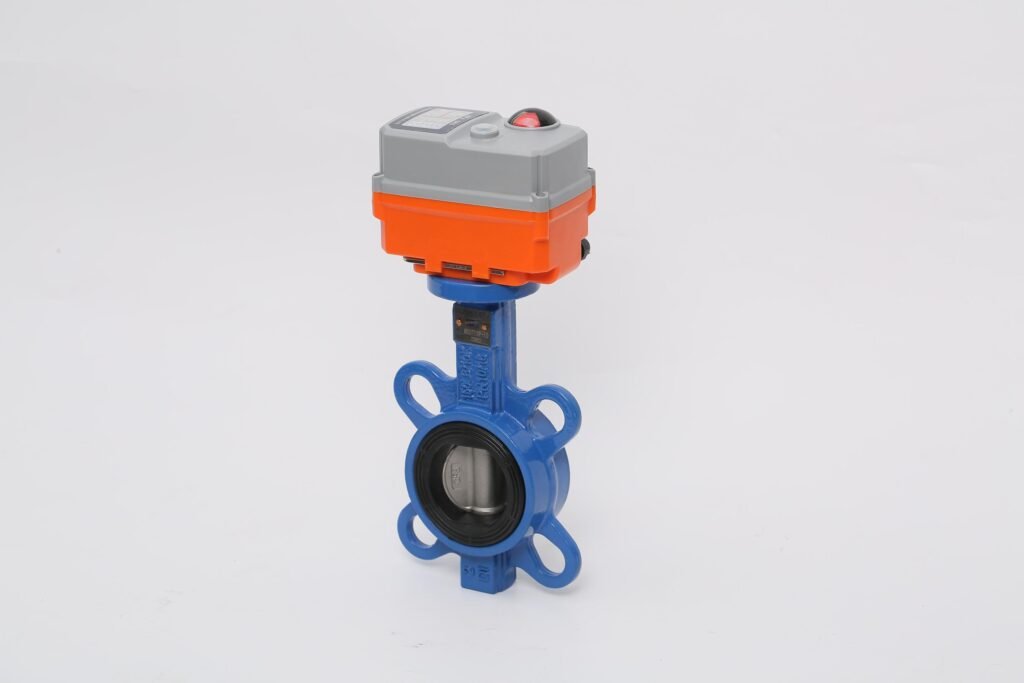
Electric motor — provides rotary or linear motion
Gear train — multiplies torque to the required level
Control electronics — receives and interprets command signals
Position sensors — confirms actual valve position
Communication interface — connects to PLCs, DCS, or SCADA systems
Diagnostics — monitors performance, detects faults, and reports status
This integration turns a simple motion device into an intelligent field instrument capable of two-way communication and self-monitoring.
The Role of Smart Electric Actuators in Industrial Automation
1. The Physical Execution Layer
Every automation system has three layers:
| Layer | Function | Example |
| Control Layer | Decision-making and logic | PLC, DCS, SCADA |
| Communication Layer | Data transmission | Modbus, Profibus, Ethernet |
| Execution Layer | Physical action | Smart electric actuators |
The actuator is the execution layer, the component that turns a control signal into real-world action. If the control layer is the brain and the communication layer is the nervous system, the actuator is the muscle.
2. Closing the Control Loop
Automation relies on closed-loop control. A sensor measures a process variable (flow, pressure, temperature, level), the controller compares it to a setpoint, and the actuator adjusts the final control element to reduce the error.
Without a responsive, accurate actuator, the loop cannot close. The process drifts, quality suffers, and efficiency drops.
3. Enabling Remote and Automated Operation
Smart electric actuators enable:
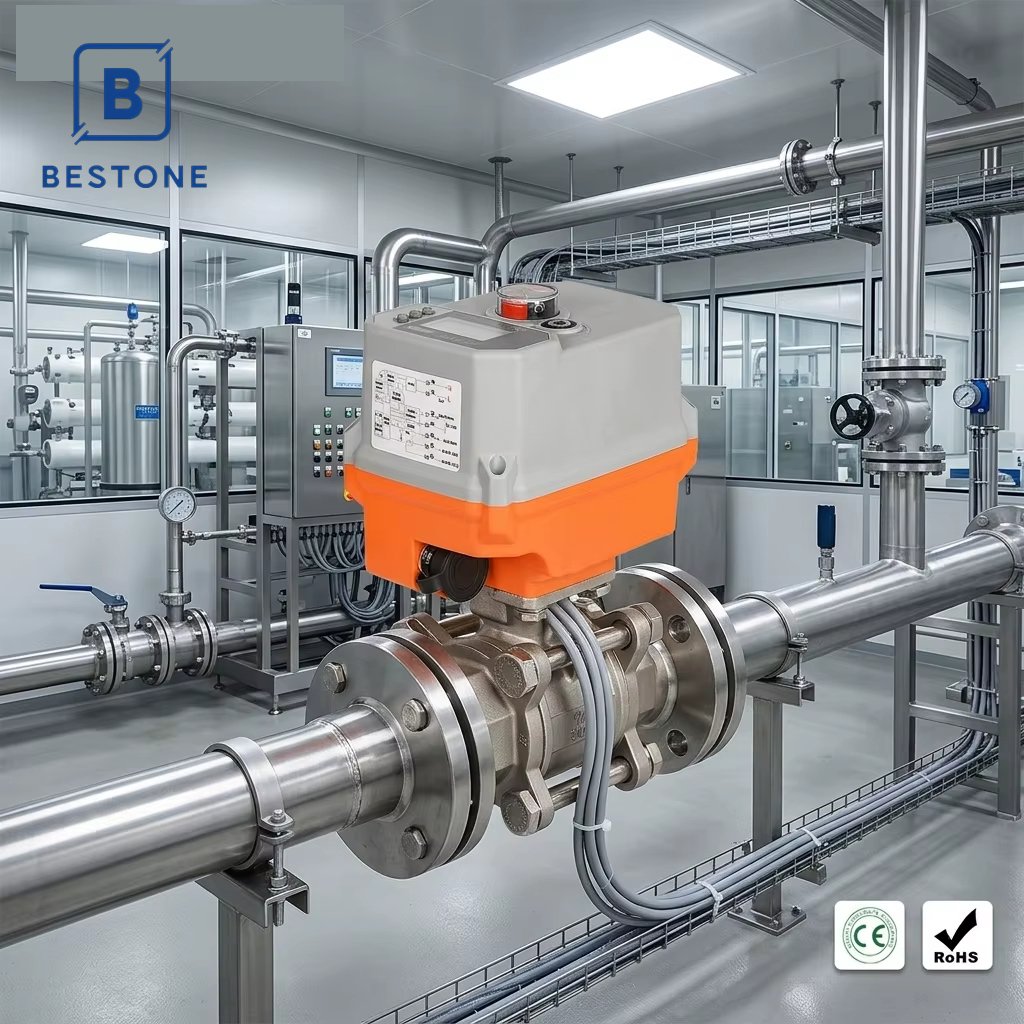
Remote operation — valves can be controlled from a central control room or even a mobile device
Automated sequences — actuators respond to programmed commands without human intervention
Unmanned facilities — remote well sites, pipelines, and treatment plants operate autonomously
4. Ensuring Safety and Reliability
In critical processes, actuators provide:
Emergency shutdown — spring-return actuators close valves on power loss
Fail-safe positioning — SuperCapacitor or battery backup drives valves to safe positions
Fault detection — diagnostics alert operators before failures occur
Safety interlock compliance — SIL2/SIL3 ratings for safety instrumented systems
Why Choose Electric Control Actuators for Industrial Automation?
1. No Compressed Air Required
Pneumatic actuators require a constant supply of clean, dry compressed air, along with compressors, dryers, filters, and piping. Electric actuators need only electrical power and a control signal.
Benefits:
Eliminates air infrastructure capital cost
Removes compressor energy consumption
No air line freeze-up in cold climates
No moisture or contamination issues
Ideal for remote sites and new projects
2. High Precision and Repeatability
Electric actuators deliver precise positioning that pneumatic actuators struggle to match:
| Parameter | Electric Actuator | Pneumatic Actuator |
| Position Accuracy | ±0.5% to ±1% | ±2% to ±5% |
| Repeatability | ±0.3% | ±1% to ±2% |
| Resolution | <0.1% of full scale | Limited by positioner |
| Deadband | Adjustable, 0.5% typical | Typically 1-2% |
This precision is essential for flow control, dosing, blending, and temperature regulation.
3. Position Feedback and Diagnostics
Smart electric actuators provide continuous position feedback and diagnostic data:
Valve position — confirms actual opening percentage
Motor status — temperature, current, and duty cycle
Fault alerts — over-torque, jammed valve, communication loss
Cycle count — tracks actuator life and maintenance intervals
This data enables predictive maintenance, reducing unplanned downtime and extending equipment life.
4. Digital Communication and Integration
Electric actuators integrate directly with modern control systems:
| Protocol | Application |
| 4-20mA | Analog control and feedback |
| Modbus RTU | Serial communication, legacy systems |
| Profibus DP | Process automation, European standard |
| Profinet | Real-time industrial Ethernet |
| EtherNet/IP | North American standard |
| BACnet | Building automation systems |
| HART | Process diagnostics |
This eliminates the need for pneumatic-to-electronic transducers and simplifies system architecture.
5. Energy Efficiency and Sustainability
Electric actuators consume power only when operating. Pneumatic systems run compressors continuously to maintain pressure—even when no valves are moving.
Energy comparison:
Electric actuator: 10-40W during operation, near-zero when idle
Pneumatic actuator: 100-200W equivalent continuous compressor load
This translates to significant energy savings over a facility’s lifetime, supporting sustainability and ESG goals.
6. Lower Total Cost of Ownership
| Cost Factor | Electric Actuator | Pneumatic Actuator |
| Initial Cost | Moderate | Low (actuator only) |
| Infrastructure | Electrical wiring only | Compressor, dryer, piping |
| Energy | Low | High (continuous compressor) |
| Maintenance | Low | Moderate (air system) |
| Downtime | Low (diagnostics) | Higher (undetected failures) |
| Total | Lower | Higher |
Smart Capabilities: What Makes an Actuator “Intelligent”?
Self-Diagnostics
Smart actuators monitor their own health:
Motor temperature and current draw
Torque output vs. expected profile
Position deviation from commanded value
Communication quality and error rates
When parameters drift outside normal ranges, the actuator issues alerts—often before a failure occurs.
Predictive Maintenance
By tracking cycle counts, torque trends, and motor performance, smart actuators enable maintenance teams to:
Replace components before failure
Schedule maintenance during planned outages
Reduce spare parts inventory
Extend actuator service life
Remote Configuration and Monitoring
Modern smart actuators support:
Bluetooth interface — configure via mobile app within 8 meters
Infrared remote — wireless setup without opening the enclosure
Mobile wireless — remote control and monitoring via APP
Web-based dashboards — real-time status from anywhere
Digital Twin Integration
Smart actuators provide the real-time data needed for digital twin models—virtual replicas of physical processes used for optimization, training, and predictive simulation.
Applications Across Industries
| Industry | Application | Why Smart Electric Actuators |
| Oil & Gas | Pipeline block valves, wellhead control | Remote operation, no air at well sites |
| Chemical | Reactor feed, heat exchanger control | Precision, hazardous area operation |
| Water Treatment | Pump station pressure, chemical dosing | Outdoor operation, EPA compliance |
| Power Generation | Boiler feedwater, steam temperature | High precision, continuous duty |
| Pharmaceutical | Purified water, process temperature | FDA compliance, material traceability |
| Food & Beverage | CIP/SIP, ingredient dosing | Hygienic design, repeatability |
| HVAC | Chilled water, AHU/FCU control | BMS integration, energy efficiency |
| Data Centers | Liquid cooling flow control | Fast response, leak isolation, PUE optimization |
Comparison: Smart Electric Actuators vs. Alternatives
| Feature | Smart Electric Actuator | Pneumatic Actuator | Hydraulic Actuator |
| Air Supply | Not required | Required | Not required |
| Hydraulic Fluid | Not required | Not required | Required |
| Position Accuracy | ±0.5% to ±1% | ±2% to ±5% | ±1% to ±2% |
| Position Feedback | Standard | Requires positioner | Requires sensor |
| Diagnostics | Built-in | Limited | Limited |
| Digital Communication | Standard | Optional | Optional |
| Remote Operation | Native | Requires solenoid | Requires servo valve |
| Energy Efficiency | High | Low | Moderate |
| Maintenance | Low | Moderate | High |
| Explosion-Proof | Ex db IIC T4-T6 Gb | Intrinsically safe | Intrinsically safe |
| Failsafe | Spring-return or SuperCap | Spring-return | Accumulator |
| Total Cost of Ownership | Low | Moderate | High |
Solving Real-World Automation Problems
Problem 1: Remote Pipeline Without Air Supply
Scenario: A remote section of pipeline requires valve automation, but no instrument air is available. Installing a compressor is prohibitively expensive.
Solution: Smart electric actuators with 4-20mA control and Modbus communication operate directly from solar or grid power. Remote monitoring via SCADA enables full pipeline visibility without air infrastructure.
Problem 2: Precision Dosing in Pharmaceutical Production
Scenario: A pharmaceutical manufacturer requires precise flow control for reagent dosing. Manual adjustment introduces variability and compliance risk.
Solution: Smart electric actuators with ±0.5% positioning accuracy and 4-20mA feedback provide repeatable, documented dosing. Data logging supports FDA 21 CFR Part 11 compliance.
Problem 3: Unplanned Downtime in Chemical Plant
Scenario: A chemical plant experiences frequent unplanned shutdowns due to valve actuator failures. Maintenance is reactive, and spare parts inventory is high.
Solution: Smart electric actuators with predictive diagnostics alert operators to motor degradation, torque anomalies, and seal wear before failure occurs. Maintenance shifts from reactive to planned, reducing downtime and inventory costs.
Problem 4: Energy Consumption in Water Treatment
Scenario: A municipal water treatment plant faces rising energy costs. Pneumatic actuators and compressors consume significant power.
Solution: Replacing pneumatic actuators with smart electric actuators eliminates compressor load. Precise flow control reduces pumping energy. Total energy savings exceed 20%.
Conclusion
Smart electric actuators are not just components, they are the physical execution layer of industrial automation. They close the loop between digital control and real-world action, enabling precise, reliable, and efficient operation across every process industry.
Why choose electric control actuators?
No compressed air required — simpler infrastructure, lower cost
High precision — ±0.5% to ±1% positioning accuracy
Position feedback — real-time confirmation for closed-loop control
Digital communication — seamless integration with PLC, DCS, SCADA, and BMS
Smart diagnostics — predictive maintenance and fault prevention
Energy efficiency — lower power consumption, sustainability support
Lower total cost of ownership reduced maintenance, longer service life With BESTONE smart electric actuators, you get the precision, intelligence, and reliability that modern industrial automation demands delivering performance across oil and gas, chemical, water treatment, power generation, pharmaceutical, food and beverage, HVAC, and data center applications.