
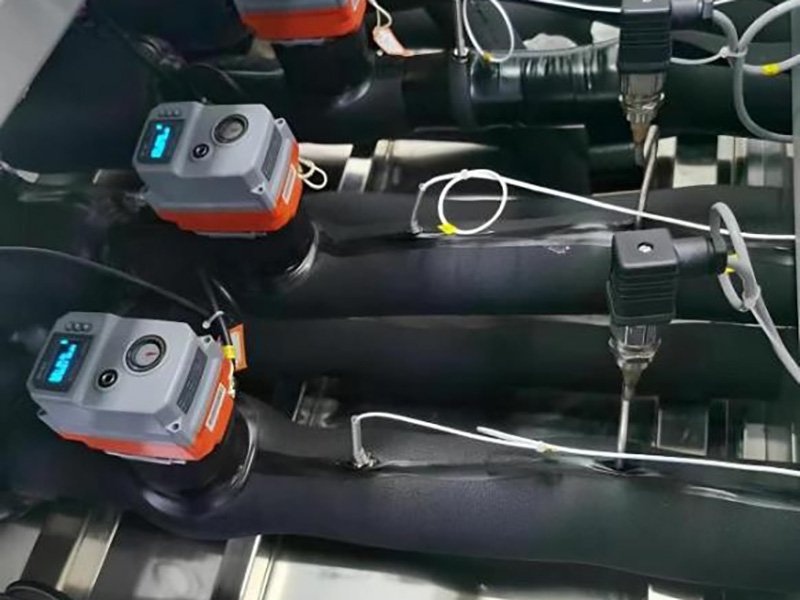
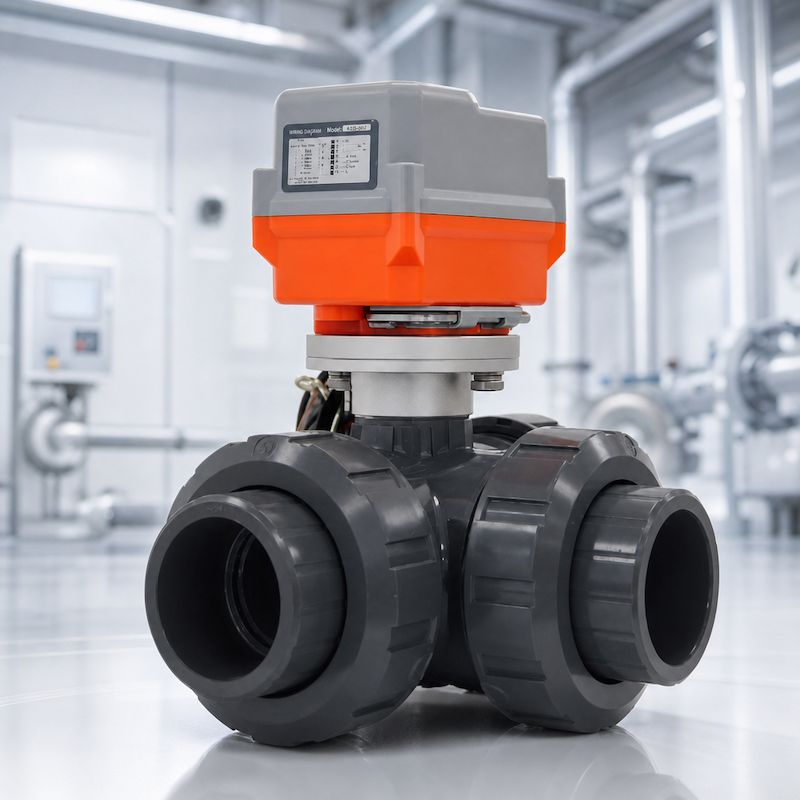
The sudden resignation of NVIDIA’s CEO has dominated tech headlines this week. Regardless of who ultimately takes the helm, one reality remains unchanged: the AI compute expansion that NVIDIA represents will not slow down because of a leadership transition. What will determine whether that compute can actually be deployed, however, lies beneath the headlines—in the data center cooling systems inside modern facilities.
In Europe, the direction of this transformation is already clear: air cooling is exiting, liquid cooling is entering. And within this shift, a component that has long been treated as an afterthought—the electric actuator—is moving from “accessory” to a decisive factor in how intelligent and energy-efficient a liquid cooling system can be. For engineers and procurement teams searching for data center valve actuators and electric actuator solutions for liquid cooling, understanding this shift is no longer optional.
1. Why Europe’s Data Centers Have No Choice But to Go Liquid
The numbers tell a story of structural inevitability. Europe’s data center cooling market was valued at approximately USD 10.16 billion in 2026 and is projected to reach USD 21.56 billion by 2031, growing at a CAGR of 16.23%. But this growth is not merely about capacity expansion, it is about a forced technology migration driven by AI workload power demands and PUE optimization requirements .
First, AI rack density has broken past the physical limits of air cooling. Traditional enterprise racks operate in the 8–20 kW range. NVIDIA’s GB300 NVL72, central to AI training clusters through 2025 and early 2026, requires up to 142 kW per rack. The newer Vera Rubin NVL72, now in full production, is estimated at 190–230 kW per rack. And Rubin Ultra NVL576 is specified at roughly 600 kW for 2027. Air cooling becomes impractical above approximately 50 kW per rack—fans simply cannot move enough air. This is not a design preference; it is thermodynamics. For high-density AI workloads, direct-to-chip liquid cooling is the only viable path .
Second, EU energy regulations create a hard constraint. The EU Energy Efficiency Directive mandates waste heat recovery for data centers above 1 MW, and F-gas regulations are accelerating the phase-out of high-GWP refrigerants. Liquid cooling not only transfers heat more efficiently but produces higher-grade waste heat that can be fed directly into district heating networks. In Milan, Retelit’s Avalon 3 data center has already integrated 2.5 MWt of waste heat into the city’s heating system, cutting 3,300 tons of CO₂ annually.
Third, hyperscalers are voting with their orders. In 2025, hyperscalers accounted for 46.78% of Europe’s data center cooling market, and their liquid cooling deployment speed far exceeds the industry average. Direct-to-chip liquid cooling already handles 100–150 kW per rack and accounted for 55% market share in 2026. This is not a pilot. It is the baseline for hyperscale data center thermal management.
2. Electric Actuators: The “Nerve Endings” of Liquid Cooling Systems
Liquid cooling systems sound grand—CDUs, secondary loops, dry coolers—but what determines whether they run precisely, efficiently, and reliably are the valve actuators distributed at every flow control node. When specifying data center valve packages, the choice between pneumatic and electric actuators has direct implications for PUE reduction strategies and cooling energy use .
2.1 Comparative Data: Why Electric Actuators Outperform Pneumatic in Liquid Cooling
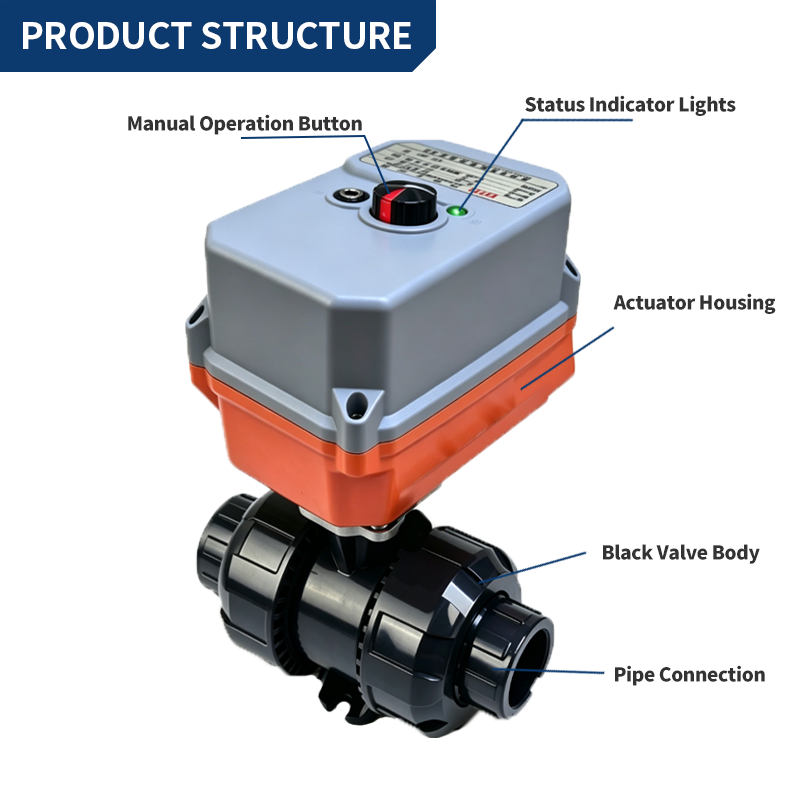
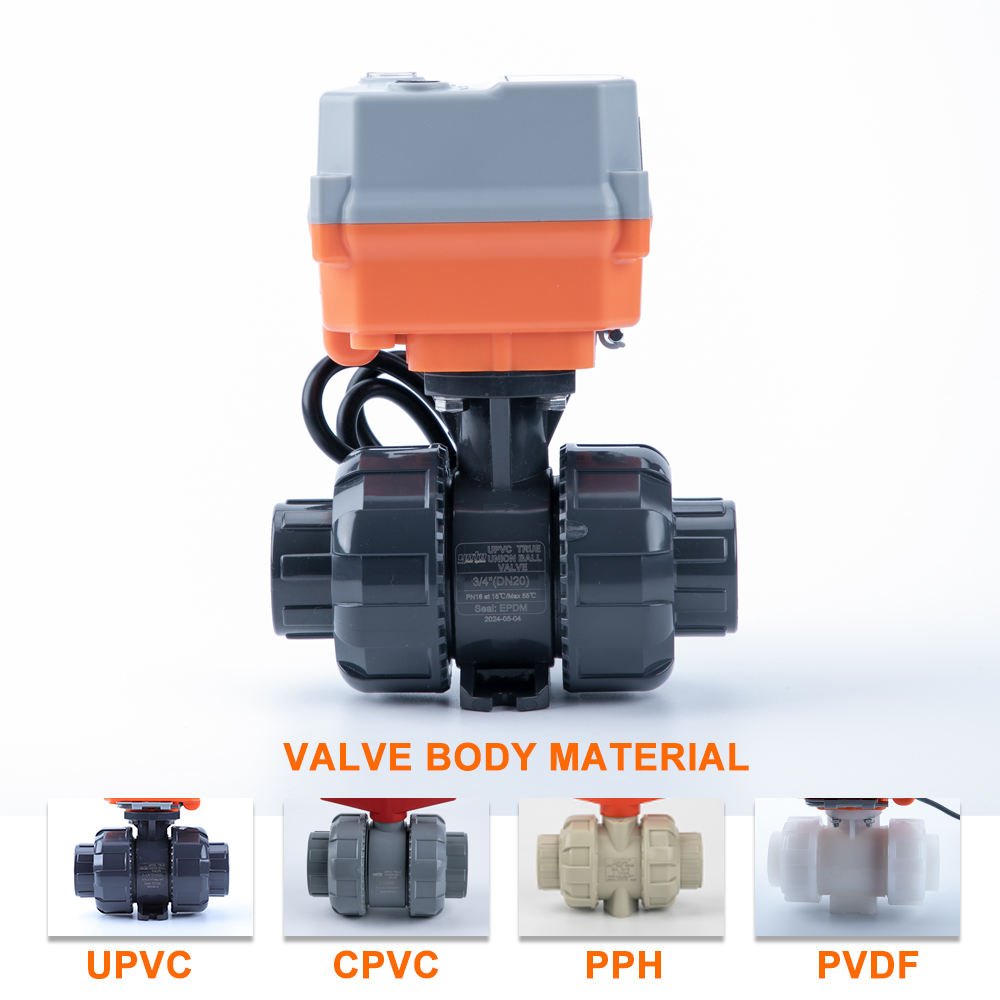
Precise flow control directly determines PUE and WUE. The energy consumption of a liquid cooling system is not primarily the coolant itself—it is the pumps and cooling tower drives. When AI workloads fluctuate (training job starts and pauses can change thermal load within seconds), coolant flow must follow in real time. Electric actuators with equal-percentage flow characteristics deliver smooth, non-oscillating adjustment, allowing pumps to avoid continuous over-supply “just in case.” The PUE reduction appears directly on the electricity bill .
Rapid isolation is the last line of defense for reliability. The greatest operational risk of liquid cooling is leakage. Even a minor coolant leak can disrupt operations or damage equipment, with losses reaching millions of dollars per rack. Integration of real-time leak detection with fast-acting electric actuators enables valve closure at rack, row, or system level the moment a leak is detected. This response speed is beyond human operations and, in many configurations, beyond what pneumatic systems can achieve with the same level of control integration .
Long life and power-loss holding match 7×24 operation. Data centers have no “off hours.” Liquid cooling valve actuators must endure years of frequent cycling while maintaining position during power interruptions to prevent uncontrolled cooling loop failure. Industry-leading products now achieve dual 100,000-cycle design life for both valve body and actuator, with power-loss position hold as a standard feature—not a marketing claim, but a specification driven by data center cooling design requirements .
3. BESTONE’s Perspective: From Industrial Fluid Control to Liquid Cooling
As a brand with years of manufacturing experience in fluid control, BESTONE has served demanding industrial applications with pneumatic and electric actuation solutions. When we examine the requirements of liquid-cooled data centers, several core capabilities overlap directly with industrial fluid control: sealing reliability, response consistency, and long-term maintenance-free operation.
But data center liquid cooling has its own specific demands. The viscosity and corrosivity of coolants—whether water-based or dielectric fluids—differ from conventional industrial media, placing higher requirements on valve body materials and seal materials. Meanwhile, the high-density layout of data center halls means actuators for data center valves must be compact while delivering sufficient torque output.
This is precisely where BESTONE’s current development focus lies: adapting industrial-grade electric actuator reliability standards to the compact, intelligent requirements of data center liquid cooling. We will not claim to already be the market leader in liquid cooling actuators—this market is still taking shape, and standards are still evolving. But we believe that adherence to manufacturing discipline and understanding of real-world operating conditions are the underlying capabilities that endure through technology transitions.
4. Three Practical Recommendations for Engineers Planning Liquid Cooling Projects
If you are involved in the selection or design of a liquid cooling system for a European data center, consider these three points:
1. Do not evaluate actuators on static torque alone. Thermal loads in liquid cooling are dynamic. Adjustment precision and repeatable positioning consistency matter more for long-term energy consumption than peak torque. Focus on control stability at partial opening, not just full-stroke response time.
2. Put “power-loss behavior” into your risk assessment. Different liquid cooling circuits require different valve positions after power loss: some need to hold position, some need to fail-open, some need emergency closure. Define the fail-safe strategy for each node during the actuator selection phase to avoid retrofits later .
3. Factor in integration cost with the BMS. The intelligence of a liquid cooling system depends heavily on the real-time data actuators provide—valve position, torque, fault codes. Choosing electric actuators that support mainstream industrial communication protocols reduces engineering effort and commissioning time when integrating with building automation systems (BMS) and DCIM platforms .
Conclusion
NVIDIA’s leadership change may make headlines, but what ultimately determines whether AI compute can be deployed lies in the fluid control details hidden beneath the data center floor and inside the CDU cabinets. Europe’s transition from air to liquid cooling is not a short-term trend—it is a generational infrastructure shift.
In this shift, the electric actuator has moved from “optional” to “critical.” Its value is not in how spectacular the technology appears, but in this: when coolant needs to flow to the right rack, at the right flow rate, at the right time, the actuator must get it right every single time.
BESTONE will continue to share our practical observations from fluid control manufacturing and data center liquid cooling applications. If you are planning a liquid cooling project or have specific questions about electric actuator selection for data centers, contact us through our website.
Frequently Asked Questions (FAQ)
Q1: What is the difference between an electric actuator for liquid cooling and a standard industrial actuator?
A: The core differences lie in response profile, compactness, and fail-safe strategy. Data center liquid cooling requires actuators to adjust or isolate within seconds to tens of seconds, fit within confined rack/CDU spaces, and be configured for defined power-loss positions. Industrial applications rarely demand this combination of speed, size, and fail-safe specificity .
Q2: Where does the energy-saving contribution of electric actuators in liquid cooling actually show up?
A: Primarily through precise flow control. When AI load drops, the actuator modulates the valve to reduce flow, and pump power decreases accordingly. Additionally, rapid isolation of a leaking branch prevents coolant waste and system-wide efficiency degradation. The equal-percentage flow characteristic ensures smooth adjustment without overshoot, directly supporting PUE optimization .
Q3: Does BESTONE have liquid cooling data center case studies?
A: BESTONE has extensive manufacturing experience in industrial fluid control actuators, and liquid cooling data centers are a priority application focus for us. For specific project information, please contact us through our website.
Q4: How do I determine the right actuator specification for my liquid cooling project?
A: You need to consider valve type (ball, butterfly, control valve), pipe size, coolant type, required torque, control signal type (on/off vs. modulating), and fail-safe requirements. We recommend engaging with an electric actuator supplier early in the design phase for technical alignment. For data center valve packages, confirming the actuator selection basis before committing the supply configuration is essential .
Q5: What are the most important SEO considerations when evaluating liquid cooling actuator suppliers?
A: Look for suppliers whose technical content addresses data center liquid cooling applications specifically, not just generic industrial actuation. Content that covers PUE reduction strategies, high-density AI workload cooling, and direct-to-chip liquid cooling indicates a supplier that understands the operational realities of modern data centers